
Last updated September 23, 2026
Free visual inspection and a written scope of work before any mitigation begins - photos, moisture readings, and drying logs go in your claim file
The scope we write is the scope we bill. Anything new gets shown to you, in writing, before we touch it.
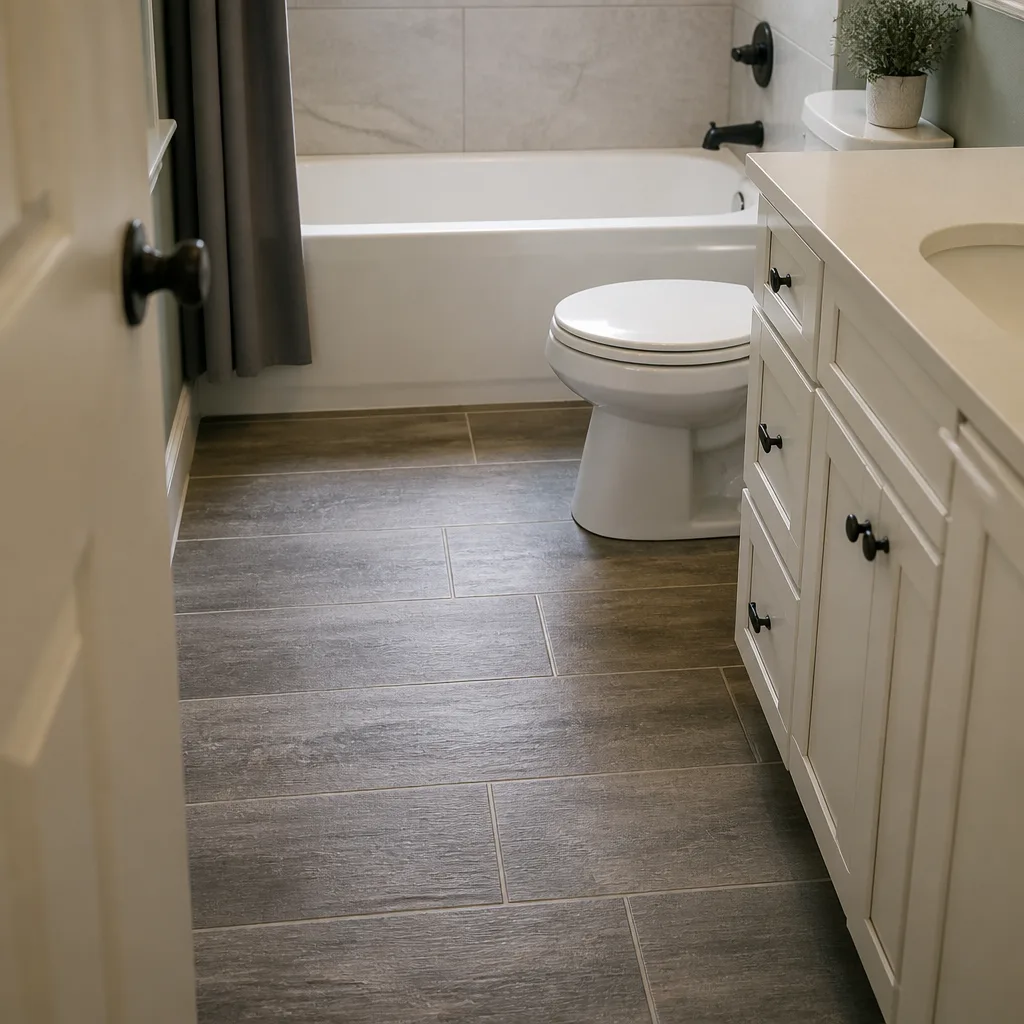

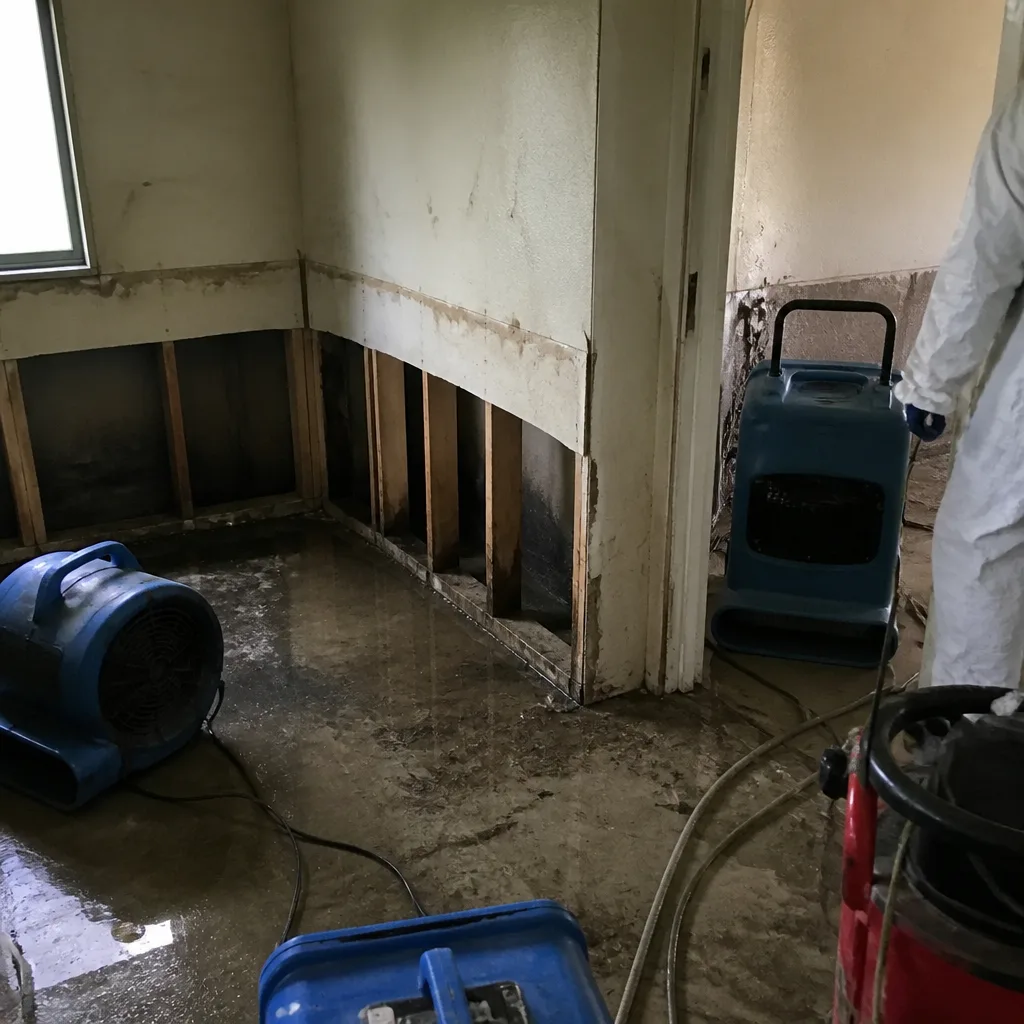 Before
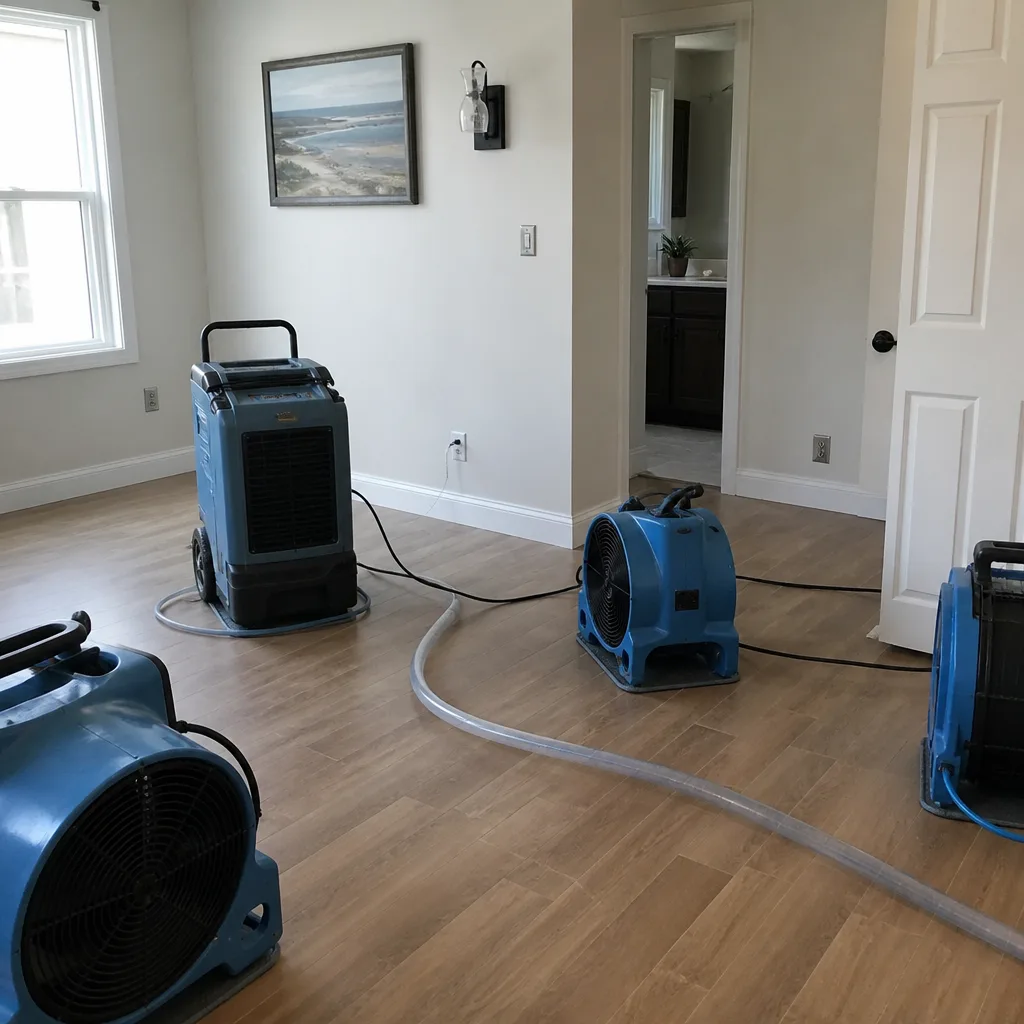 After
After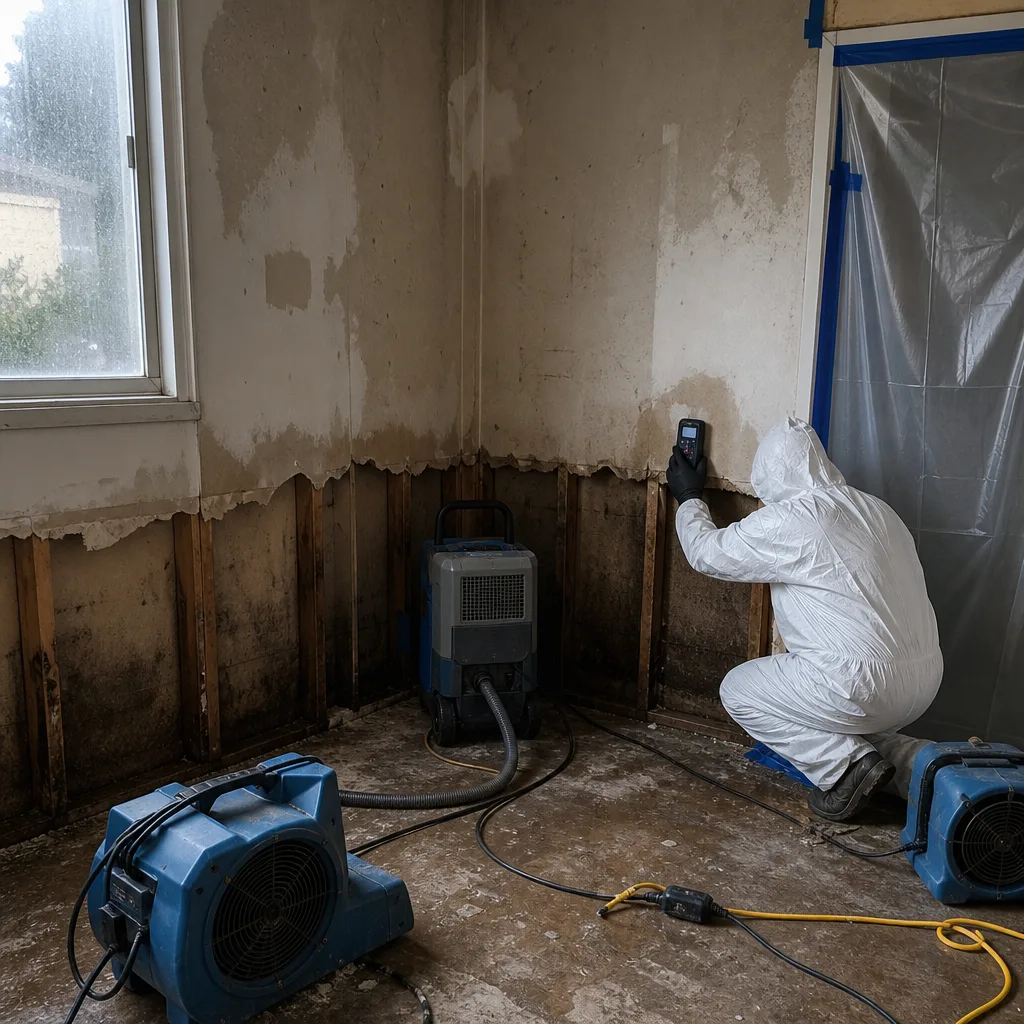 Before
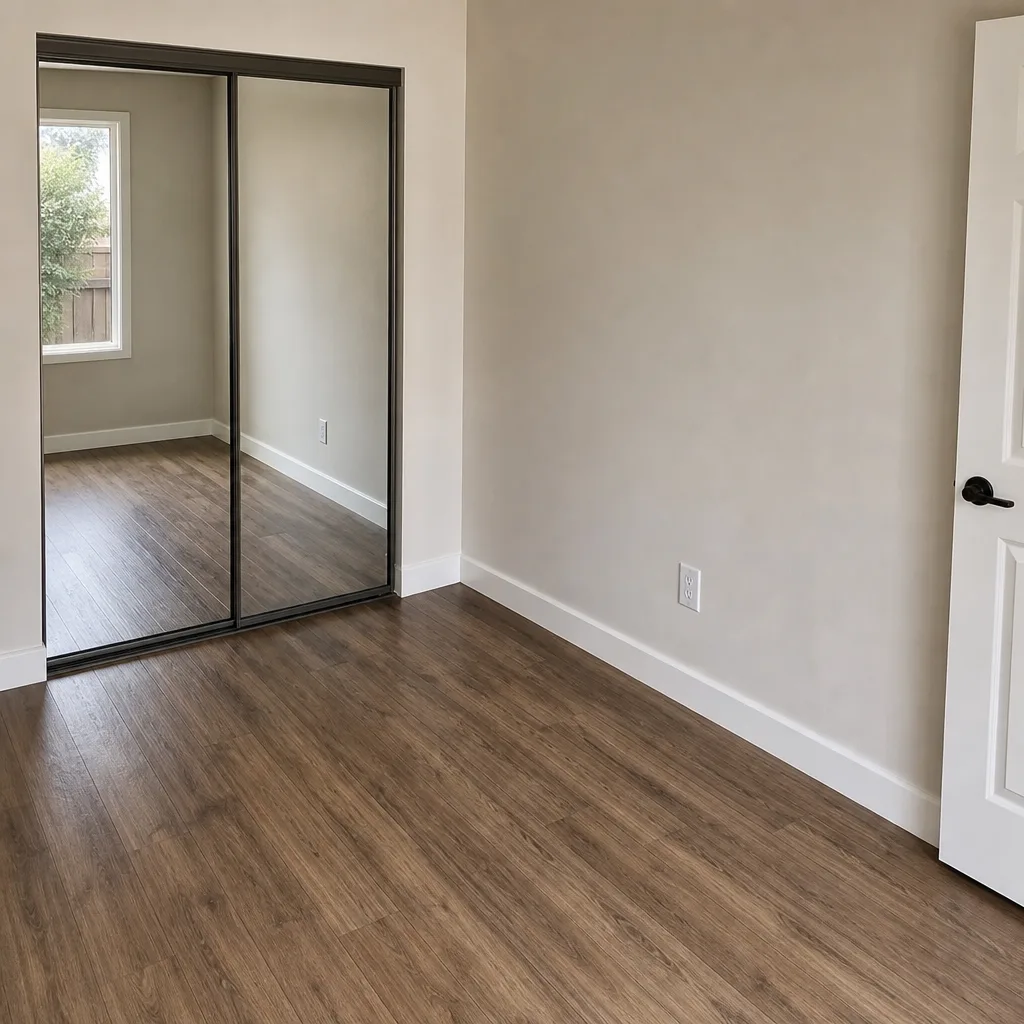 After
After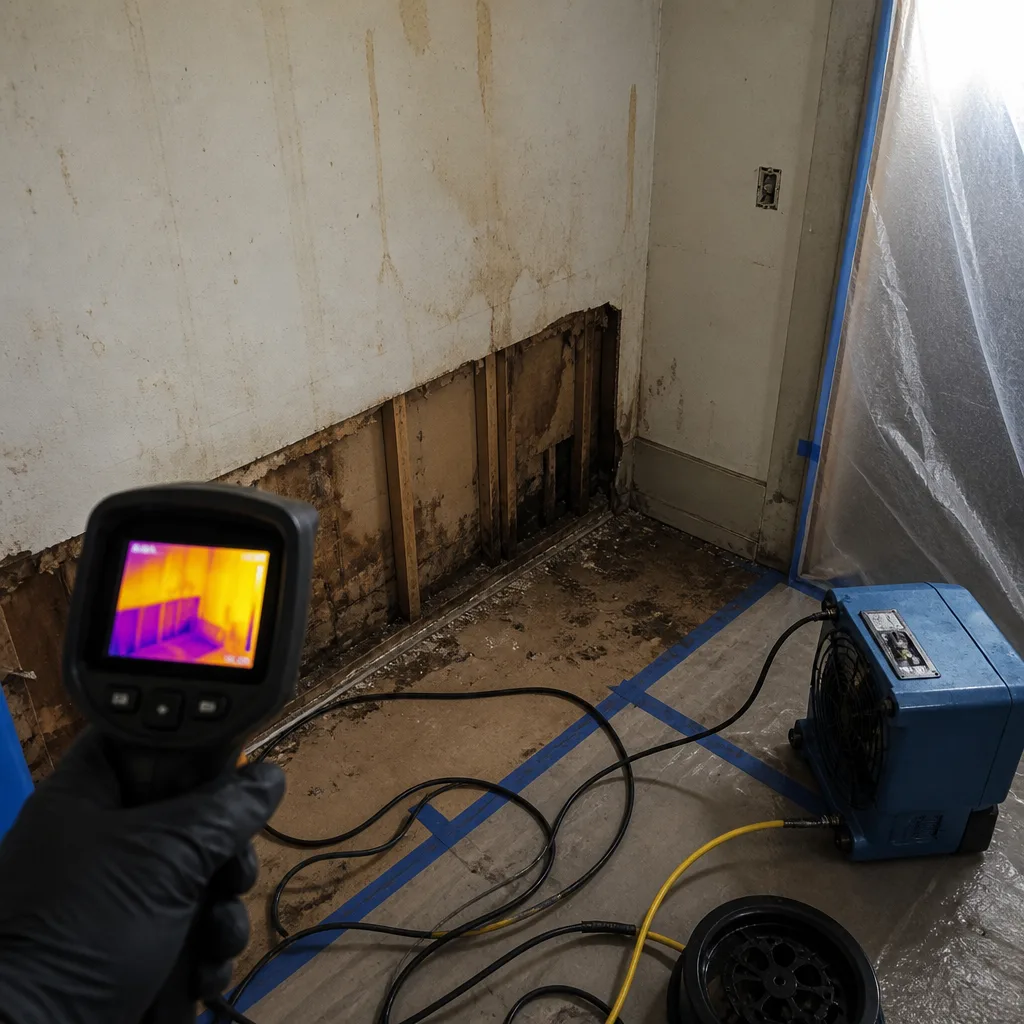 Before
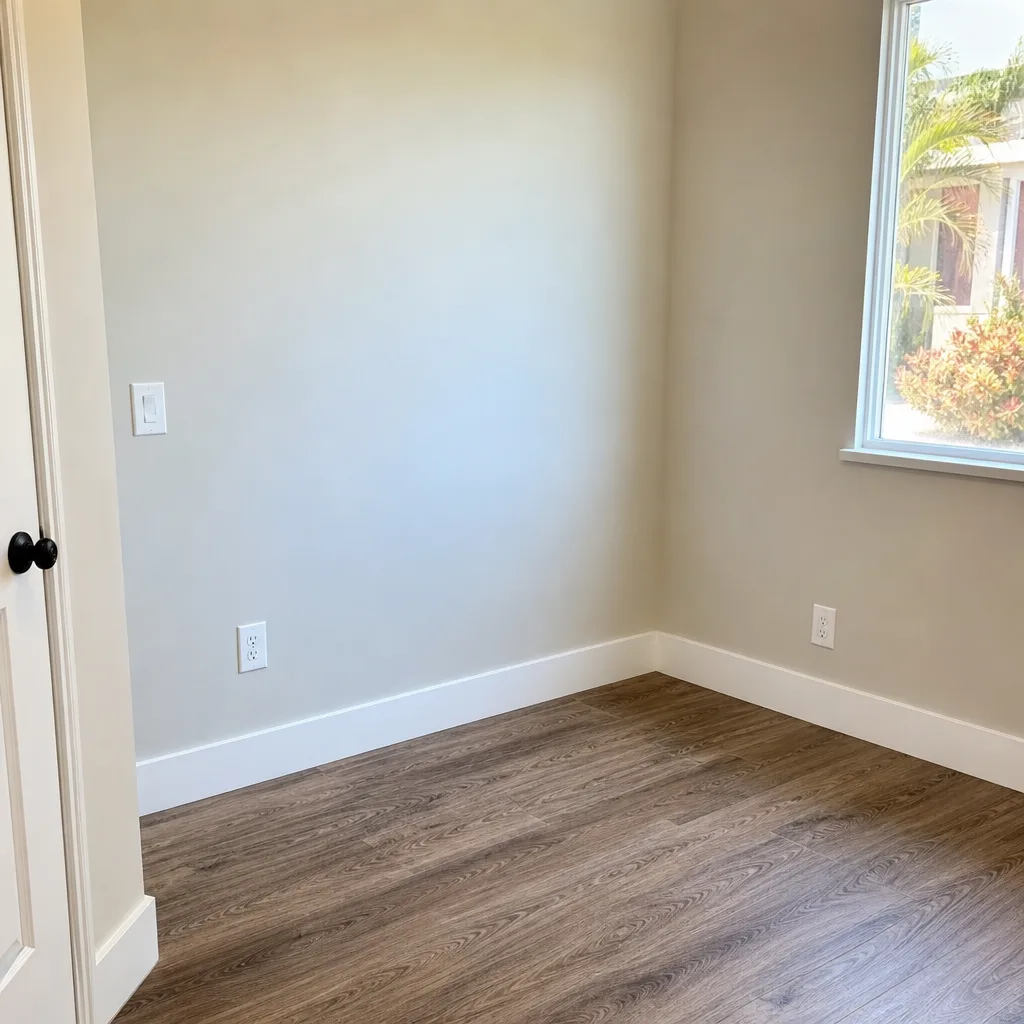 After
AfterHow to Hire a Damage Restoration Contractor in Escondido: A Step-by-Step Guide
Here’s what most guides won’t tell you: a contractor’s five-star reviews describe how polite the crew was. They tell you nothing about whether their drying logs survived an adjuster’s desk audit. In Escondido, where San Diego County insurers process claims through Xactimate pricing software and routinely request psychrometric documentation, the difference between a paid invoice and a negotiated-down settlement often comes down to paperwork the homeowner never sees. We’ve restored over 12,000 homes since 2011, and the pattern is consistent - the jobs that pay out cleanly are the ones where the contractor documented everything before, during, and after drying. Our complete guide to damage restoration in Escondido walks you through the specific steps to identify that contractor before water, mold, or fire damage turns into a documentation dispute.
Quick Answer
To hire a damage restoration contractor in Escondido, verify their CSLB license is active and carries the B-General or C-61/D-64 classification, request four specific documents before signing (written scope, line-item estimate, equipment placement plan, and drying goal thresholds), confirm they use Xactimate pricing compatible with San Diego County insurers, and ask whether the crew in your house will be employees or undocumented subcontractors. The right contractor delivers a written price before work starts, provides photo documentation on every visit, and produces daily moisture logs that satisfy IICRC, RIA, and IFA standards.
Table of Contents
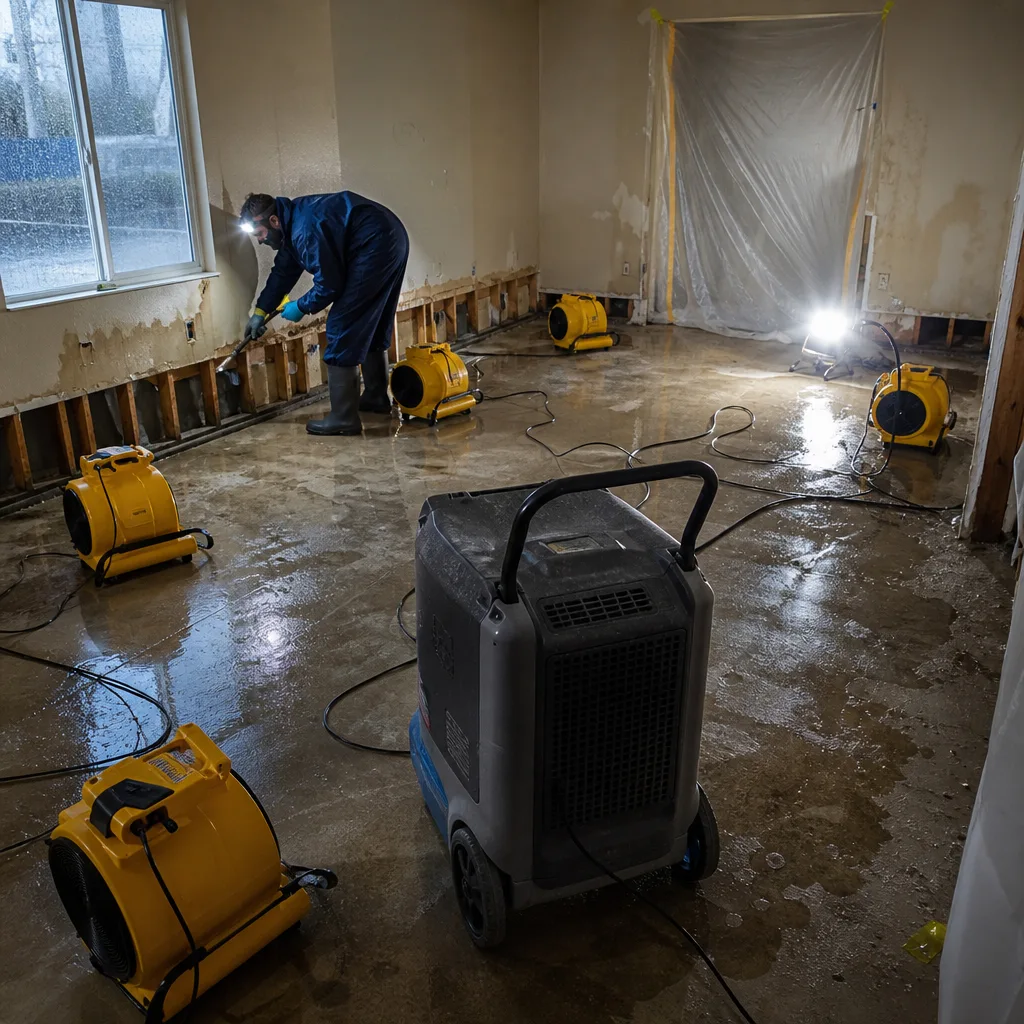
- Verify the License First - CSLB in Under Three Minutes
- The Four Documents to Request Before Signing Anything
- Why Xactimate Pricing Matters More Than IICRC Certification Alone
- Red Flags Specific to Escondido and San Diego County
- The Subcontractor Documentation Trap
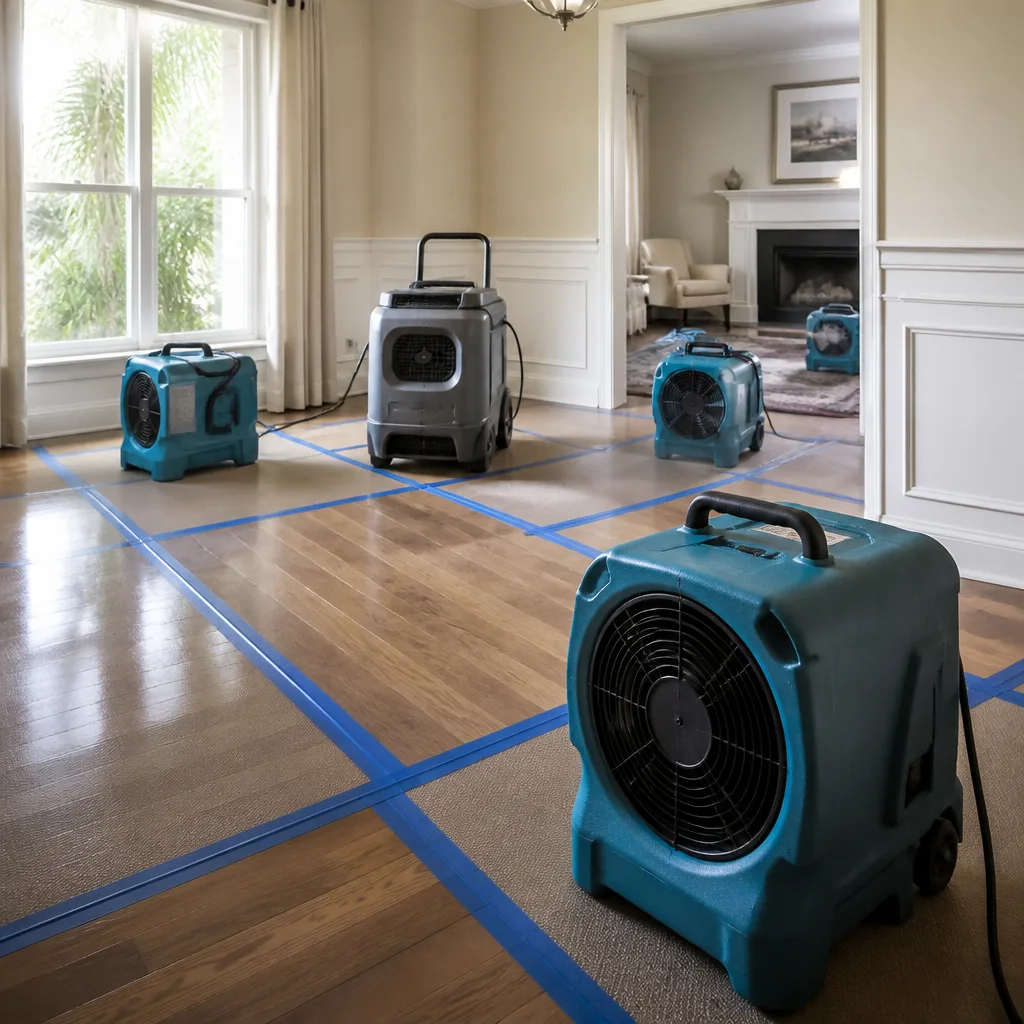
- What Professional-Grade Drying Equipment Looks Like
- How Documentation Decides Whether Your Claim Gets Paid
- Common Mistakes to Avoid
- When to Call a Professional
- Frequently Asked Questions
BeforeAfterVerify the License First - CSLB in Under Three Minutes
The California State License Board (CSLB) maintains a free online lookup at cslb.ca.gov. Enter the contractor’s license number, and within three minutes you’ll know whether they’re active, suspended, or nonexistent. This step sounds obvious, but in the chaos after a pipe burst or wildfire ember damage, homeowners skip it. Don’t.
Here’s what to check:
- Status: Active. Suspended means they cannot legally contract for work, and any invoice they produce may be unenforceable.
- Classification: B-General Building Contractor or C-61/D-64 (Non-Specialized). Water damage restoration falls under these. A C-36 Plumbing license alone does not authorize structural drying.
- Workers’ compensation: Required if the contractor has employees. Exempt status with a crew of five is a contradiction worth questioning.
- Bond history: Multiple bond claims suggest pattern problems with project completion or financial management.
In Escondido, unlicensed restoration work creates a specific problem beyond legal risk: most San Diego County insurers will not recognize invoices from unlicensed contractors as valid claim documentation. If your adjuster discovers the contractor lacked proper classification, the entire mitigation portion of your claim may be disallowed, leaving you with a damp house and a bill no one will pay. We’ve reviewed competitor estimates where this exact scenario unfolded in the San Marcos Creek floodplain area, and the homeowner absorbed $14,000 in previously approved drying costs.
At DryMark Restoration Escondido, our license number appears on every written scope. We encourage verification. A contractor who resents this question has already answered it.
The Four Documents to Request Before Signing Anything
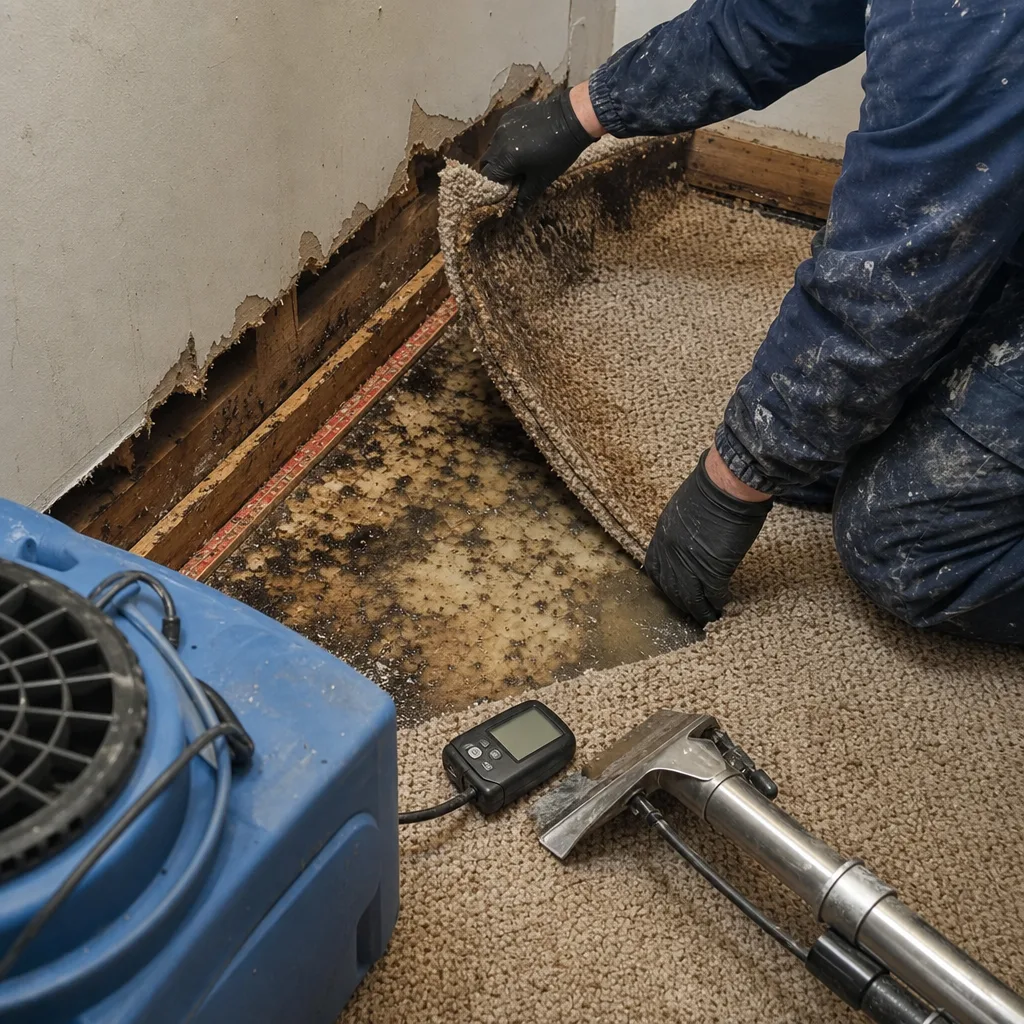
Haven Standard, Clause 1 requires a written price before work begins. But “written price” is a minimum. The four documents below separate documentation-first contractors from those who intend to figure it out as they go.
1. Written Scope of Work
This describes what will be done, room by room, material by material. Not “dry out the house.” Rather: “Remove saturated 5/8″ drywall from 2′ above floor line in living room (approx. 320 sq ft), remove wet R-13 fiberglass insulation from north and east walls, apply antimicrobial to exposed studs, deploy LGR dehumidifier and axial air movers per IICRC S500 standards.” Vague scopes invite scope creep. Precise scopes create accountability.
2. Line-Item Estimate
Each task carries a separate price. Demolition. Debris disposal. Equipment rental per day. Moisture monitoring visits. Antimicrobial application. Reconstruction. When an adjuster reviews this, they can verify each line against Xactimate pricing databases. Lump-sum estimates - “$8,500 to fix everything” - get rejected or negotiated down because the adjuster cannot validate the components.
3. Equipment Placement Plan
Professional drying requires calculated air movement and dehumidification capacity based on affected cubic footage, class of water damage, and material permeance. The placement plan shows where each piece of equipment goes, why, and how many air changes per hour the configuration achieves. Without this, you’re trusting someone to guess. In Escondido’s inland climate, where summer humidity drops below 40% but winter marine layer moisture can stall evaporation, seasonal damage restoration care matters.
4. Drying Goal Thresholds
This document states the specific moisture content percentages or equilibrium moisture content (EMC) targets for each material type before equipment removal. For example: “Oak hardwood flooring: target 9-11% moisture content, verified with pin-type meter at 6 locations per 100 sq ft.” Goals prevent premature equipment pickup, which causes secondary damage, and they prevent indefinite rental, which inflates your invoice.
We provide all four documents on every water damage restoration in Escondido job. No exceptions. The homeowner signs them before work starts, and the adjuster receives copies within 24 hours.
Why Xactimate Pricing Matters More Than IICRC Certification Alone
IICRC certification indicates a technician has completed training in water damage restoration standards. It does not mean their invoices will pass insurer audit. That depends on pricing methodology.
Xactimate is the estimating software used by State Farm, Farmers, USAA, and most other carriers serving Escondido homeowners. It contains geographically adjusted unit costs for every conceivable restoration task. When a contractor’s estimate uses Xactimate pricing, the adjuster can verify each line item against a recognized database. When a contractor uses custom pricing, arbitrary markups, or “time and materials” billing, the adjuster must negotiate each element, and the homeowner often absorbs the difference.
Here’s the practical difference:
- Xactimate-based estimate: $2,340 for 5 days of LGR dehumidifier rental at Escondido’s pricing tier. Adjuster approves in minutes.
- Custom pricing: “$375/day, best rate in town.” Adjuster applies Xactimate’s $468/day cap, approves $2,340 total, contractor bills $1,875 extra. Homeowner pays or fights.
We use Xactimate pricing on every estimate. The number we write is the number your insurer recognizes. Haven Standard, Clause 1 exists precisely to eliminate the surprise of post-work billing adjustments.
That said, IICRC certification still matters for technical execution. It ensures technicians understand psychrometric science - the relationship between temperature, humidity, and vapor pressure that drives evaporation. But certification without Xactimate pricing is like knowing how to drive without a license plate: technically capable, legally complicated.
Red Flags Specific to Escondido and San Diego County
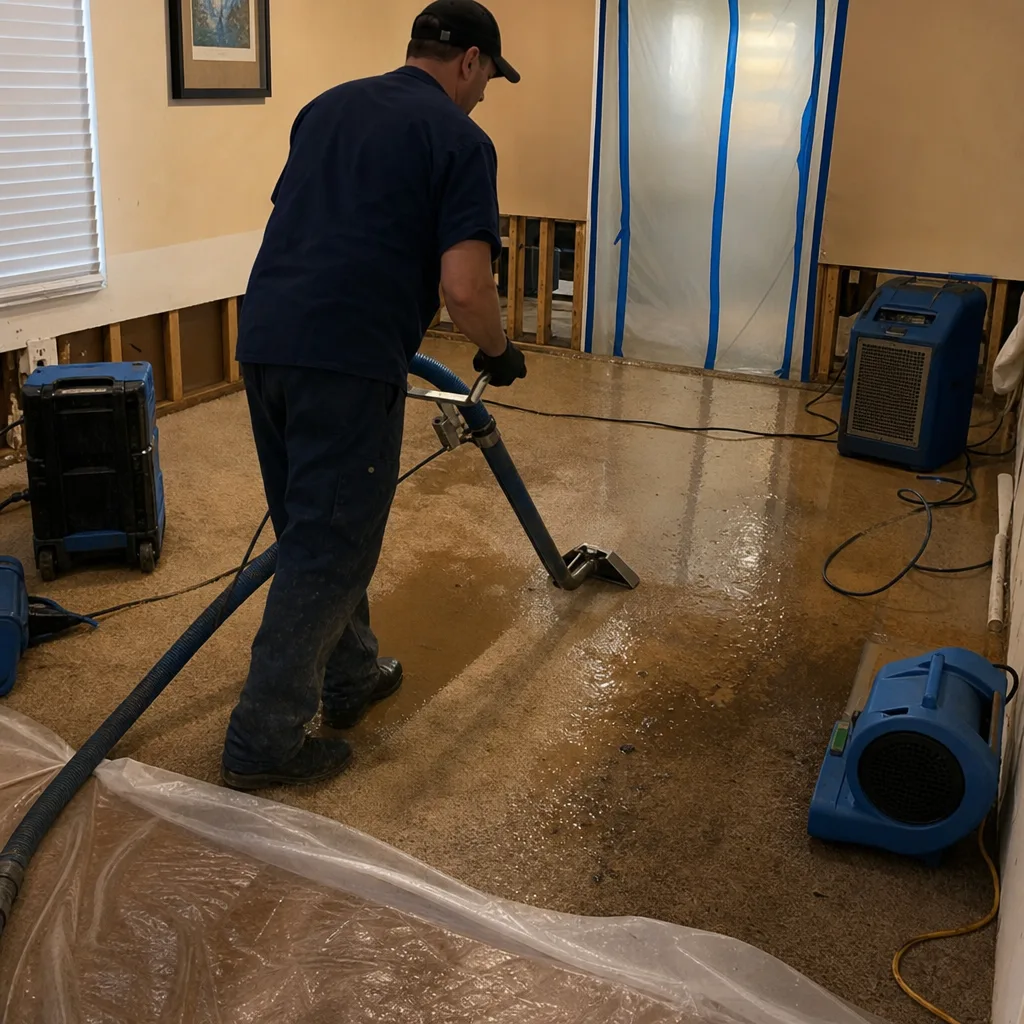
Post-disaster markets attract operators who move faster than regulators. San Diego County’s combination of wildfire exposure, flash flood risk in canyon neighborhoods like Hidden Meadows and Daley Ranch, and dense suburban housing creates conditions where unethical solicitation thrives.
Watch for these specific patterns:
- Door-knockers after storms. Legitimate restoration companies in Escondido do not canvas neighborhoods with hail or wind damage. CSLB prohibits unsolicited door-to-door contracting for repairs over $500. Anyone offering immediate service at your doorstep is likely unlicensed or working through a third-party lead generator who takes 30% of the job value.
- Assignment of benefits (AOB) pressure. Some contractors ask you to sign over your insurance claim rights to them. This is legal in some states. In California, it’s a red flag. Once you assign benefits, the contractor negotiates directly with your insurer, you lose visibility into the settlement, and disputes become your problem without your control.
- Verbal-only scopes with “we’ll figure it out.” Every restoration job generates debris, moisture, and structural questions. A contractor who won’t commit to a written scope before starting either lacks experience or intends to expand the job once they’re inside. Haven Standard, Clause 1 was written for this scenario.
- Demands for large upfront deposits. California law limits deposits to $1,000 or 10% of contract value, whichever is less. A restoration contractor requesting $5,000 to “secure equipment” before documentation is either ignorant of the law or testing yours.
- No local physical address. Storm-chasing operators use virtual offices or hotel rooms. Verify the business address on CSLB matches a real location. DryMark Restoration Escondido maintains permanent operations in the city; our crews know Escondido’s building stock, from 1970s tract homes in Kit Carson to newer construction in Harmony Grove.
The Subcontractor Documentation Trap
The company you hire and the crew in your house are often different entities. Large restoration firms frequently subcontract mitigation work to smaller operators, then mark up their invoices. This creates a documentation gap: the subcontractor’s moisture logs may never reach the primary contractor, who submits incomplete records to your adjuster.
Ask directly: “Will the employees who perform the work be on your payroll, or will you subcontract any portion?” If subcontracting is involved, request:
- The subcontractor’s CSLB license number and classification
- Written confirmation that all documentation (moisture logs, photo records, equipment readings) will be consolidated under the primary contractor’s job file
- Your right to refuse specific subcontractors without job cancellation penalties
In our experience, the worst documentation failures occur where multiple subcontractor invoices hit an adjuster’s desk with inconsistent dates, missing photos, and conflicting moisture readings. The adjuster rejects portions of each, and the homeowner receives a partial payment that doesn’t cover actual costs.
We do not subcontract mitigation work. Our technicians are employees, background-checked, uniformed, and named on every job file. The moisture log created on day one is the same moisture log submitted with the final invoice.
What Professional-Grade Drying Equipment Looks Like
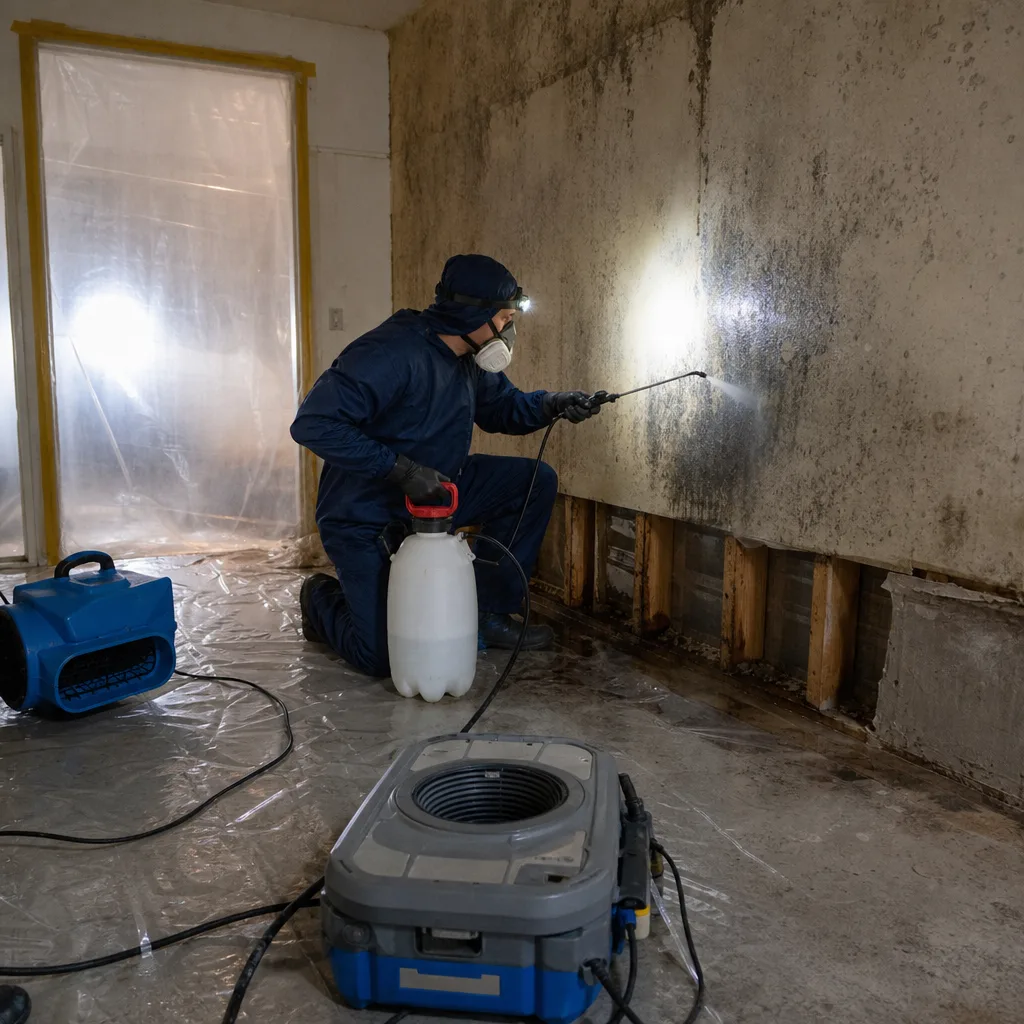
Equipment brand names matter less than proper application, but knowing what professional-grade systems look like helps you distinguish a prepared contractor from one renting consumer units from a hardware store.
Professional drying requires four categories of equipment:
- Low-grain refrigerant (LGR) dehumidifiers: These remove moisture to specific dew point thresholds, not just “dry air.” Brands like Dri-Eaz and Phoenix dominate this category. A contractor showing up with a residential dehumidifier rated for 70 pints per day cannot achieve the vapor pressure differential needed for Class 3 or 4 water damage.
- Axial and centrifugal air movers: These create controlled airflow across wet surfaces. XPOWER and B-Air manufacture units designed for 24/7 operation with documented CFM output. Consumer fans move air; they don’t produce the 1,200-3,200 CFM at the surface needed for proper evaporation.
- Injectidry or equivalent cavity drying systems: These force dry air into wall cavities, under hardwood flooring, and behind cabinetry without full demolition. Essential for Escondido homes with tile-over-slab construction where water migrates horizontally before showing surface signs.
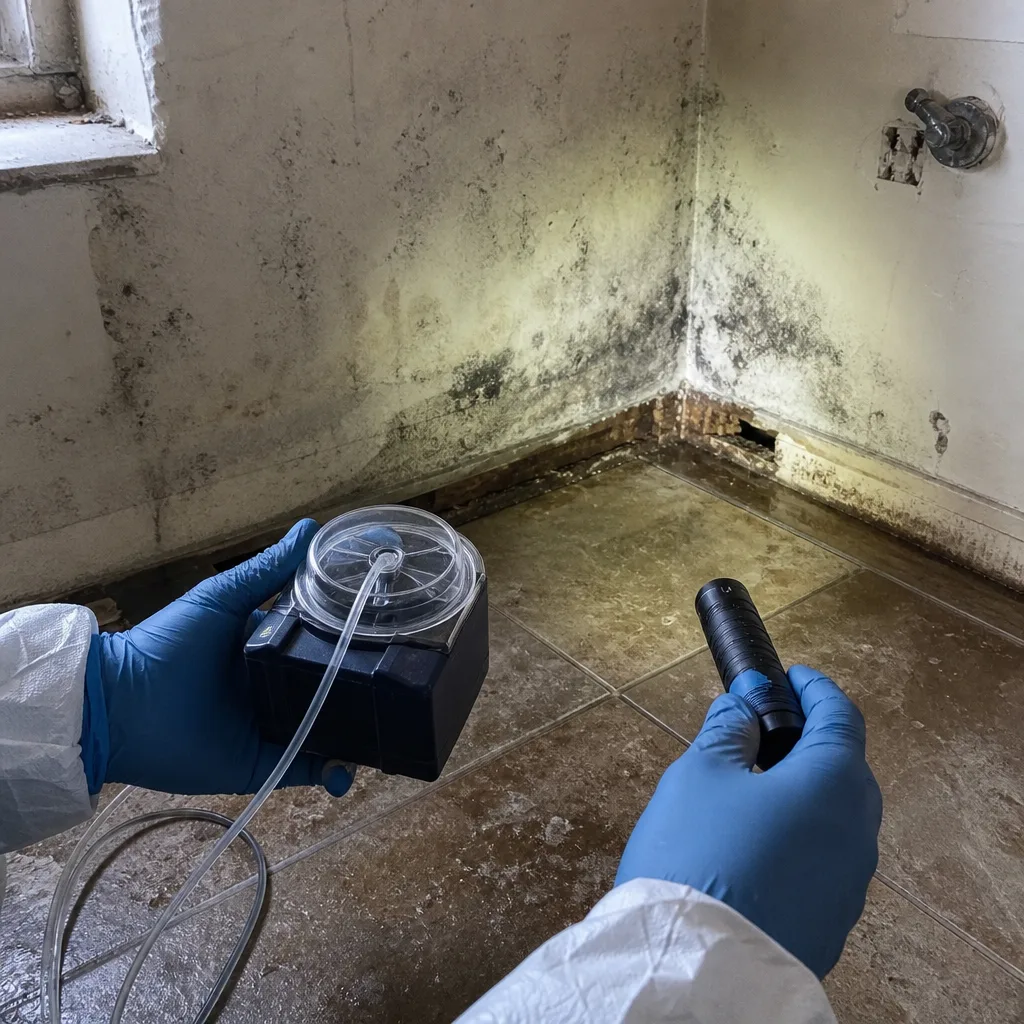
- Thermal imaging and moisture measurement: FLIR cameras and pin/non-pin moisture meters document hidden saturation. Without these, a contractor is guessing at the extent of water migration.
Ask to see the equipment list for your job, with model numbers. Ask how many days each piece is estimated for. Equipment left too long inflates cost; removed too early leaves moisture that breeds mold. The placement plan (Document 3 above) should justify every unit and every day.
Our equipment inventory includes Dri-Eaz, Phoenix, XPOWER, B-Air, and Injectidry systems, deployed according to IICRC S500 standards and documented with daily readings.
How Documentation Decides Whether Your Claim Gets Paid
This is where more guides & resources fail entirely. They discuss drying techniques, emotional support, and response speed. They ignore the desk audit.
After mitigation completes, your contractor submits an invoice to your insurer. That invoice enters a queue for review by an adjuster who has never seen your house. The adjuster’s job is to verify that every charge is justified, documented, and priced according to recognized standards. What they receive determines what you receive.
A complete claim file contains:
- Initial moisture readings with meter type, calibration date, and location map
- Daily psychrometric data: temperature, relative humidity, and specific humidity at set intervals
- Photo documentation dated and annotated, showing condition before work, during each phase, and at completion
- Equipment readings showing runtime hours and dehumidifier performance (pints removed per day)
- Written scope signed by homeowner before work began
- Line-item estimate using Xactimate pricing
- Final moisture readings confirming drying goals achieved
Incomplete files get partial payment. We’ve reviewed competitor jobs where $11,000 in legitimate drying costs were reduced to $4,200 because the contractor provided three photos total and no daily logs. The homeowner paid the difference or lived with incomplete drying.
Our documentation package includes all elements above as standard deliverables, never upsells. The 365-Day Done Right Promise under The Haven Standard applies to documentation quality too - if your adjuster requests additional records, we produce them.
For fire and smoke damage restoration in Escondido, documentation requirements expand to include pre-cleaning photo inventory, ultrafine particle testing results, and hydroxyl generator or ozone treatment logs. The principle remains identical: what cannot be documented cannot be claimed.
Common Mistakes to Avoid
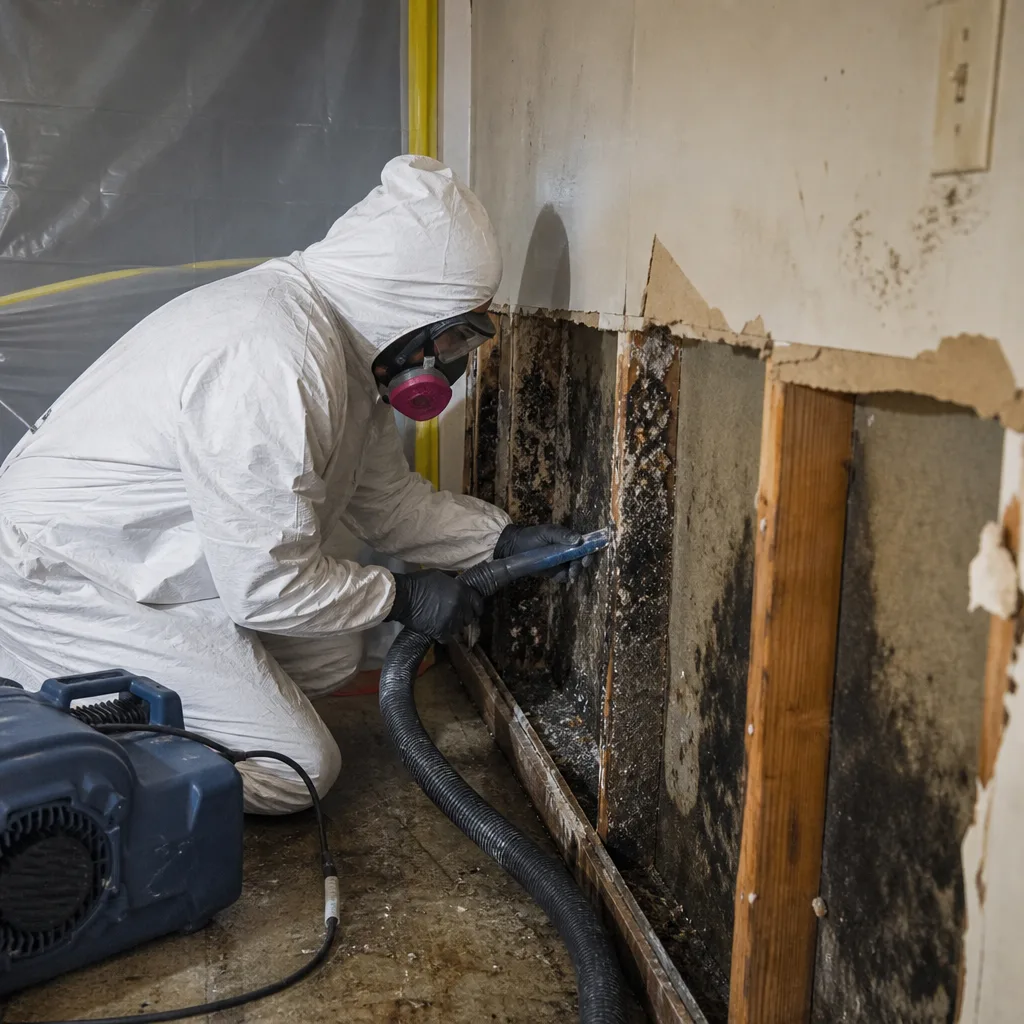
- Hiring based on response speed alone. A contractor who arrives in 30 minutes with no documentation plan will create more problems than they solve. In Escondido’s canyon fire zones, we’ve seen rapid-response crews begin demolition without moisture mapping, removing dry walls while leaving wet cavities intact.
- Accepting a verbal estimate. California requires written contracts for home improvement work over $500. More importantly, verbal estimates cannot be submitted to insurers. Haven Standard, Clause 1 exists because verbal pricing fails at both legal and financial levels.
- Neglecting to verify CSLB status in real time. License status changes. A contractor active last month may be suspended today. Check at cslb.ca.gov the day you sign, not the day you got their card.
- Assuming the general contractor handles everything. If you’re already working with a GC on a remodel when water damage occurs, they may bring in a restoration subcontractor without your direct involvement. Insist on the four documents from whoever performs the actual drying work.
- Ignoring Escondido’s specific climate factors. Our inland location means summer heat can accelerate evaporation but also drive moisture deeper into materials if not properly contained. Winter marine layer conditions slow drying and extend equipment needs. A contractor quoting uniform drying timelines regardless of season doesn’t understand local conditions.
- Failing to ask about mold prevention documentation. In mold remediation in Escondido, insurers require pre- and post-remediation air sampling with laboratory chain-of-custody documentation. Ask whether your contractor coordinates this or expects you to arrange it separately.
When to Call a Professional
Some situations tolerate delay for careful contractor selection. Others do not. Call immediately when:
- Water has contacted electrical panels, gas lines, or structural components
- Sewage or gray water is involved (Category 2 or 3 contamination requires specialized handling and health documentation)
- Odor persists after initial cleanup, suggesting hidden moisture or microbial growth
- Fire damage has compromised roof integrity or HVAC systems
- Any water damage occurs in a home with pre-existing respiratory conditions or immunocompromised residents
In these scenarios, speed of proper documentation matters as much as speed of response. A contractor who mitigates quickly but submits incomplete records leaves you with unresolved insurance disputes months later.
DryMark Restoration Escondido offers free estimates in Escondido - call (760) 691-2950. We provide written scopes before work begins, documented photo records on every visit, and the 365-Day Done Right Promise backed by The Haven Standard. If you’ve received a competitor’s estimate, our Free Second Opinion service reviews it at no charge.
Frequently Asked Questions
Typical residential water damage mitigation in Escondido ranges from $1,800 for limited Category 1 cleanup in a single room to $8,500+ for whole-house Class 3 drying with cavity injection and hardwood floor rescue. Reconstruction costs are additional and depend on material selections. Call (760) 691-2950 for a written estimate specific to your situation - estimates are free under Haven Standard, Clause 1.
Most Escondido homeowners’ policies cover sudden and accidental water damage, subject to your deductible and policy limits. Coverage disputes arise when documentation is insufficient to prove the damage was sudden rather than long-term, or when invoices use non-standard pricing. A contractor who provides daily moisture logs, dated photo records, and Xactimate-based estimates significantly improves full-payment probability. We coordinate directly with adjusters and provide the documentation package insurers expect.
True emergency response for active water intrusion should be under 90 minutes in Escondido proper during normal conditions. However, response time and documentation quality are separate variables. A contractor who arrives in 45 minutes with no moisture meters creates worse outcomes than one who arrives in two hours with a complete documentation kit. Ask what they bring, not just when they leave.
Category 1 clean water in a small, accessible area with immediate attention can sometimes be handled by homeowners with proper equipment. Category 2 or 3 contamination, any water contacting wall cavities or subflooring, or damage exceeding approximately 50 square feet requires professional mitigation for insurance validity and health safety; follow a water damage restoration maintenance checklist for Escondido homeowners to stay prepared. In Escondido’s older neighborhoods like Old Escondido Historic District, plaster-and-lath construction traps moisture unpredictably and nearly always requires professional cavity drying.
You retain responsibility for your claim, but a documentation-first contractor should handle direct adjuster communication regarding technical matters. We provide adjusters with complete file packages within 24 hours of request and attend desk reviews when disputes arise. You should never be left translating between your contractor’s invoices and your adjuster’s questions.
Restoration contractors specialize in emergency mitigation: water extraction, drying, mold containment, smoke remediation. Reconstruction contractors rebuild what was removed. Some companies, including DryMark Restoration Escondido, provide both services under unified documentation. If you hire separate mitigation and reconstruction contractors, ensure the mitigation contractor’s scope clearly defines where their work ends and reconstruction begins, or you’ll pay for duplicate services or miss critical transition steps.
The Bottom Line
Hiring a damage restoration contractor in Escondido comes down to one test: can they produce documentation precise enough that your insurer pays the invoice without negotiation? Verify the CSLB license. Demand the four documents before signing. Confirm Xactimate pricing. Ask who performs the actual work. Inspect their equipment list. Review their documentation package from a previous job if possible. The contractor who welcomes this scrutiny is the one who won’t leave you with a disputed claim and unfinished repairs.
Written by Alicia Brennan, Owner at DryMark Restoration Escondido, serving Escondido since 2011.