
Last updated September 23, 2026
Free visual inspection and a written scope of work before any mitigation begins - photos, moisture readings, and drying logs go in your claim file
The scope we write is the scope we bill. Anything new gets shown to you, in writing, before we touch it.
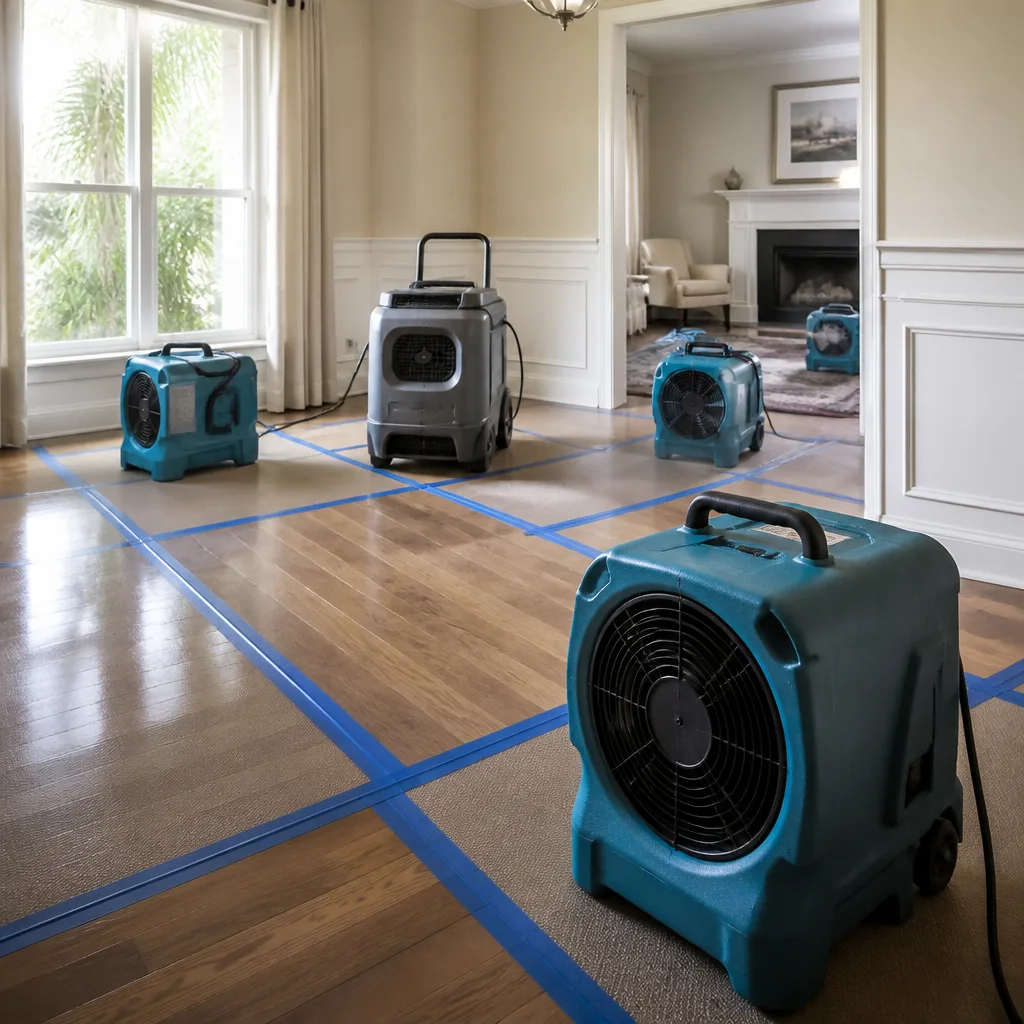

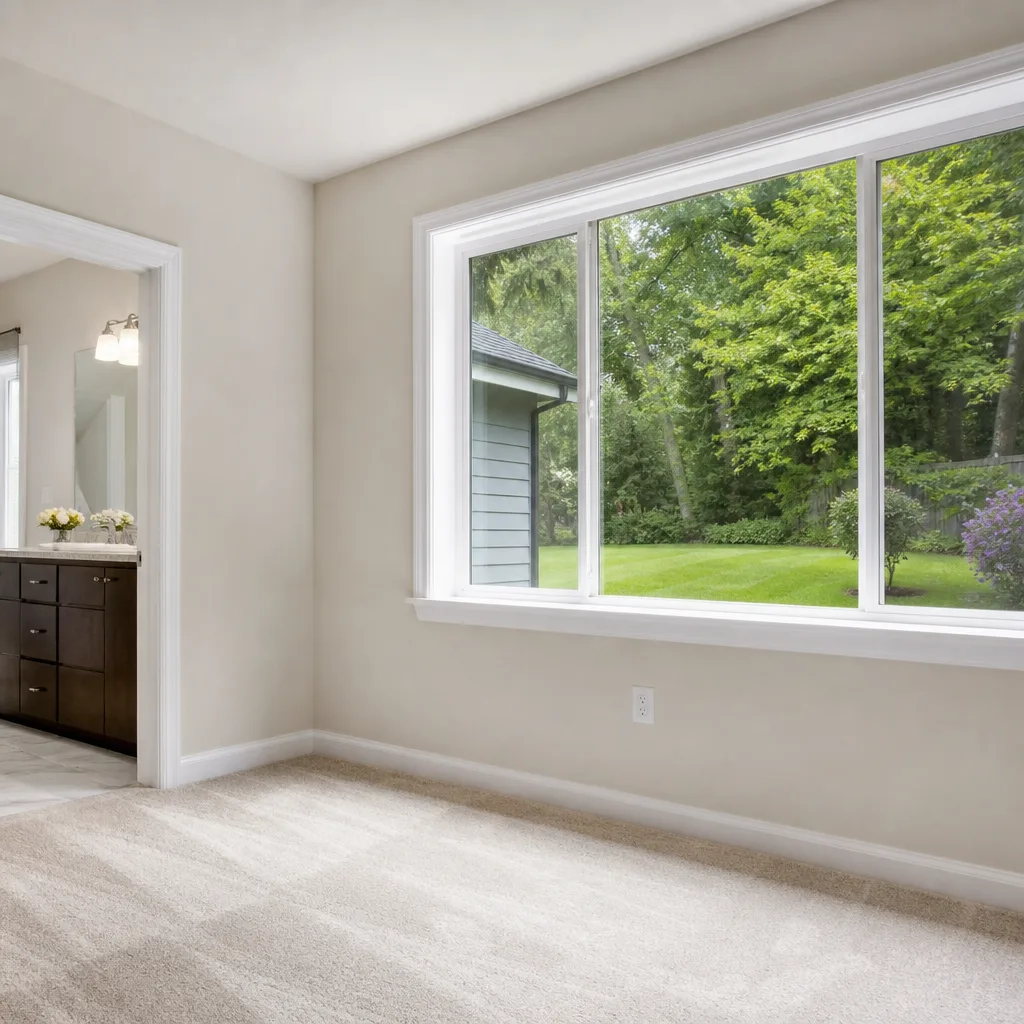

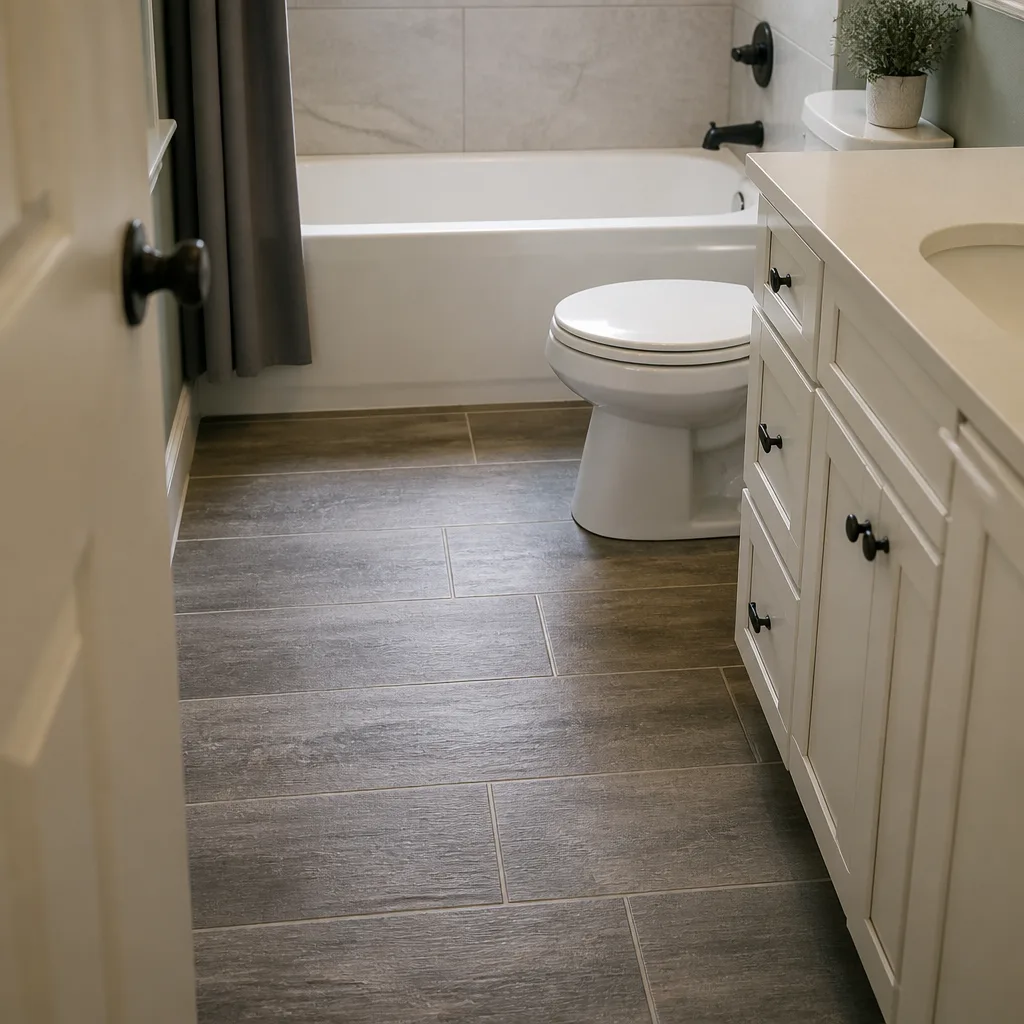

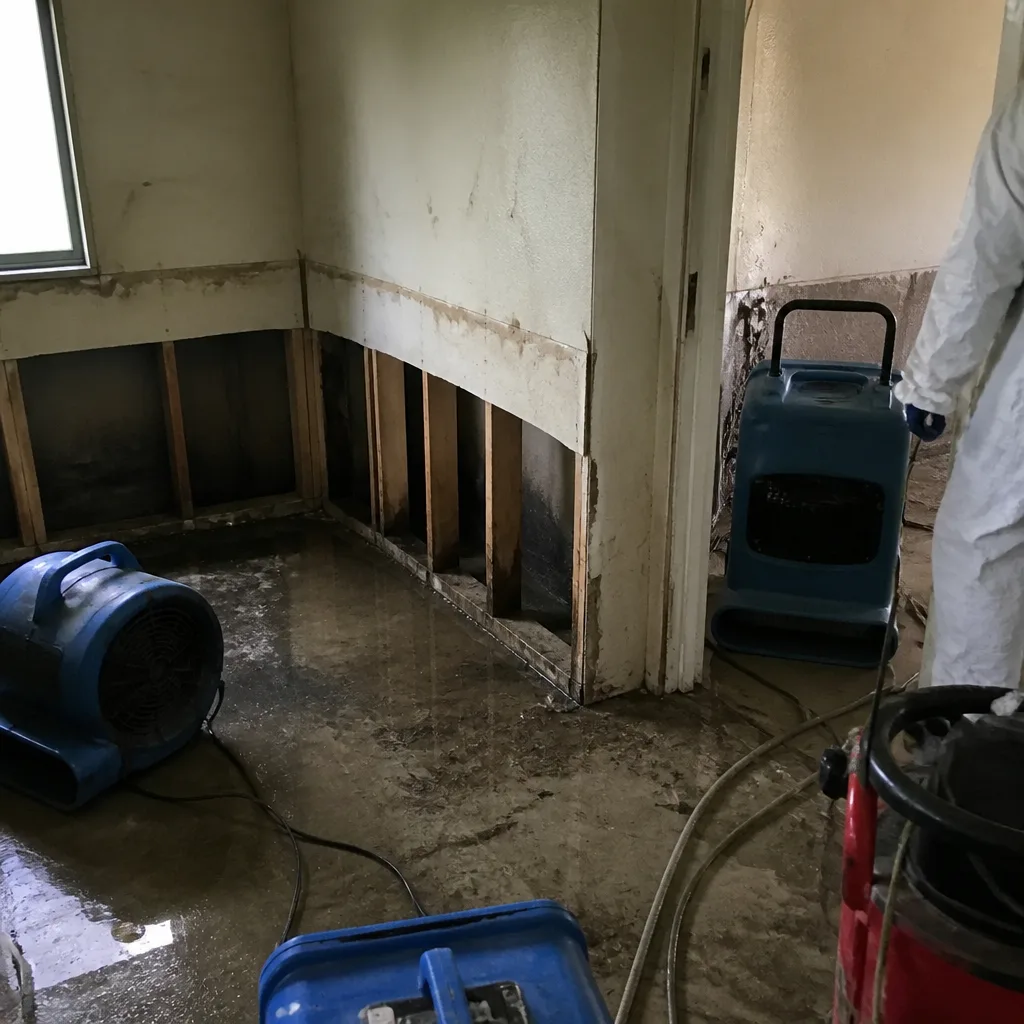 Before
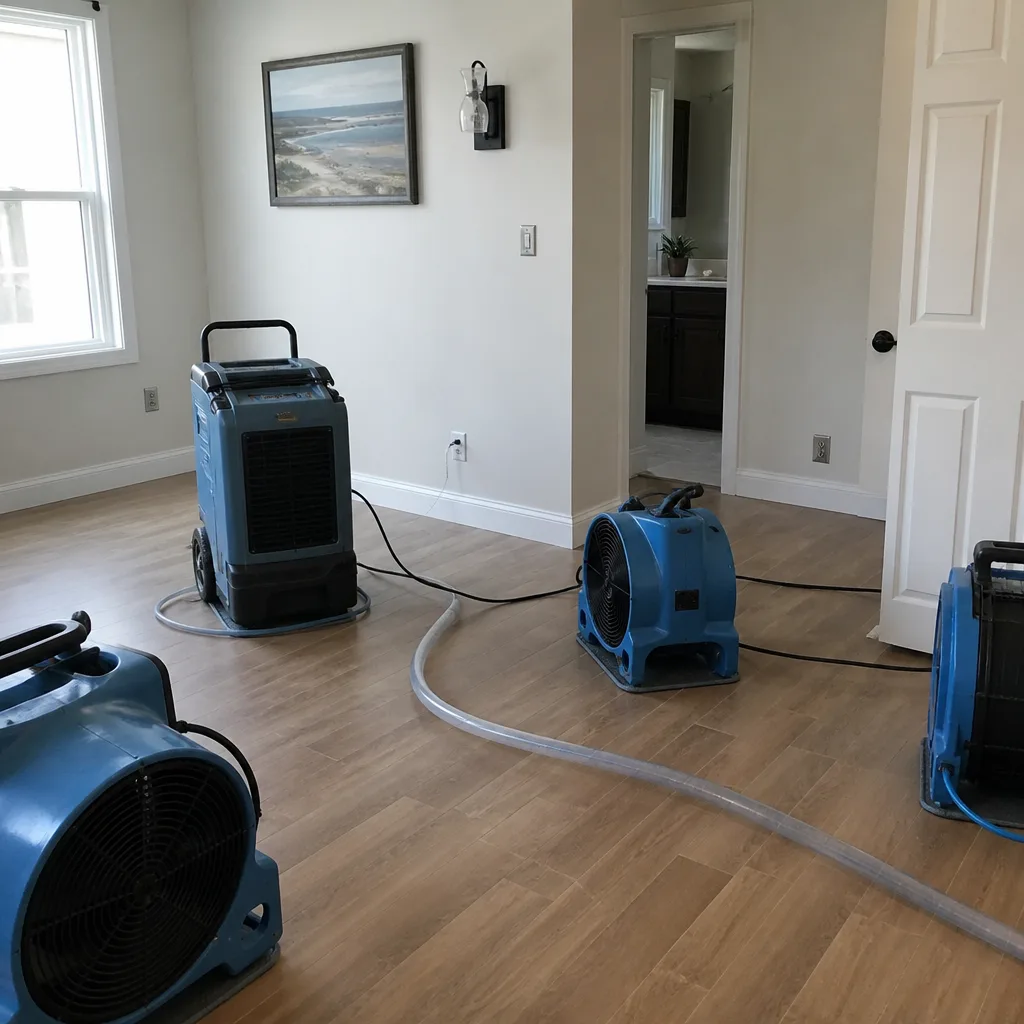 After
After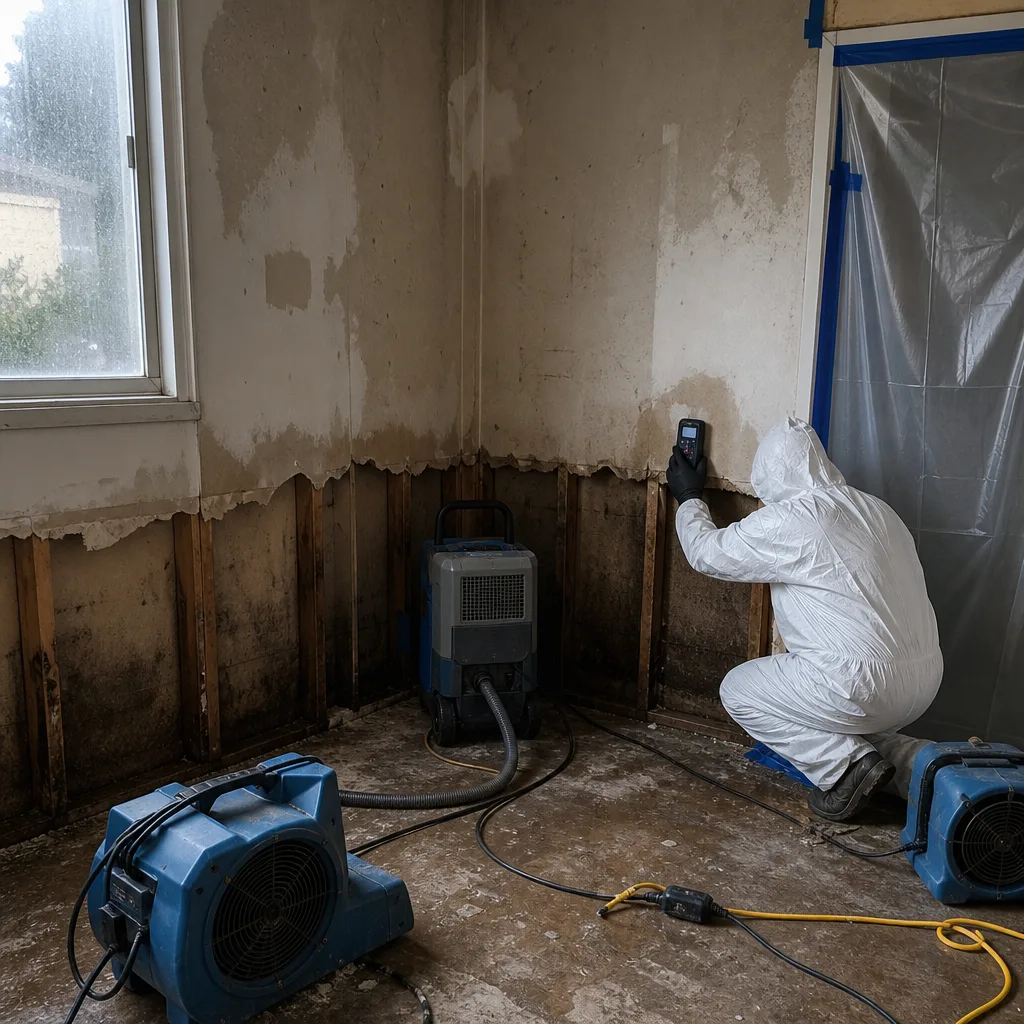 Before
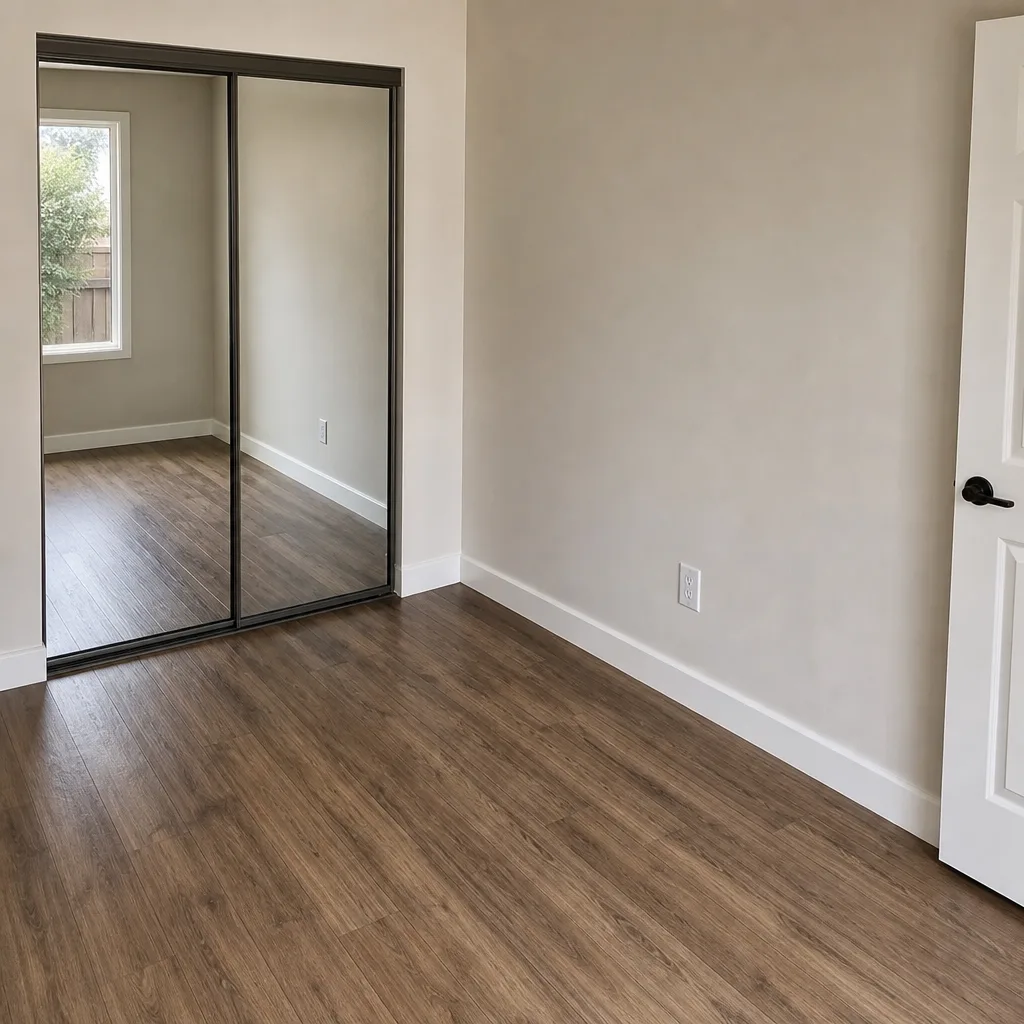 After
After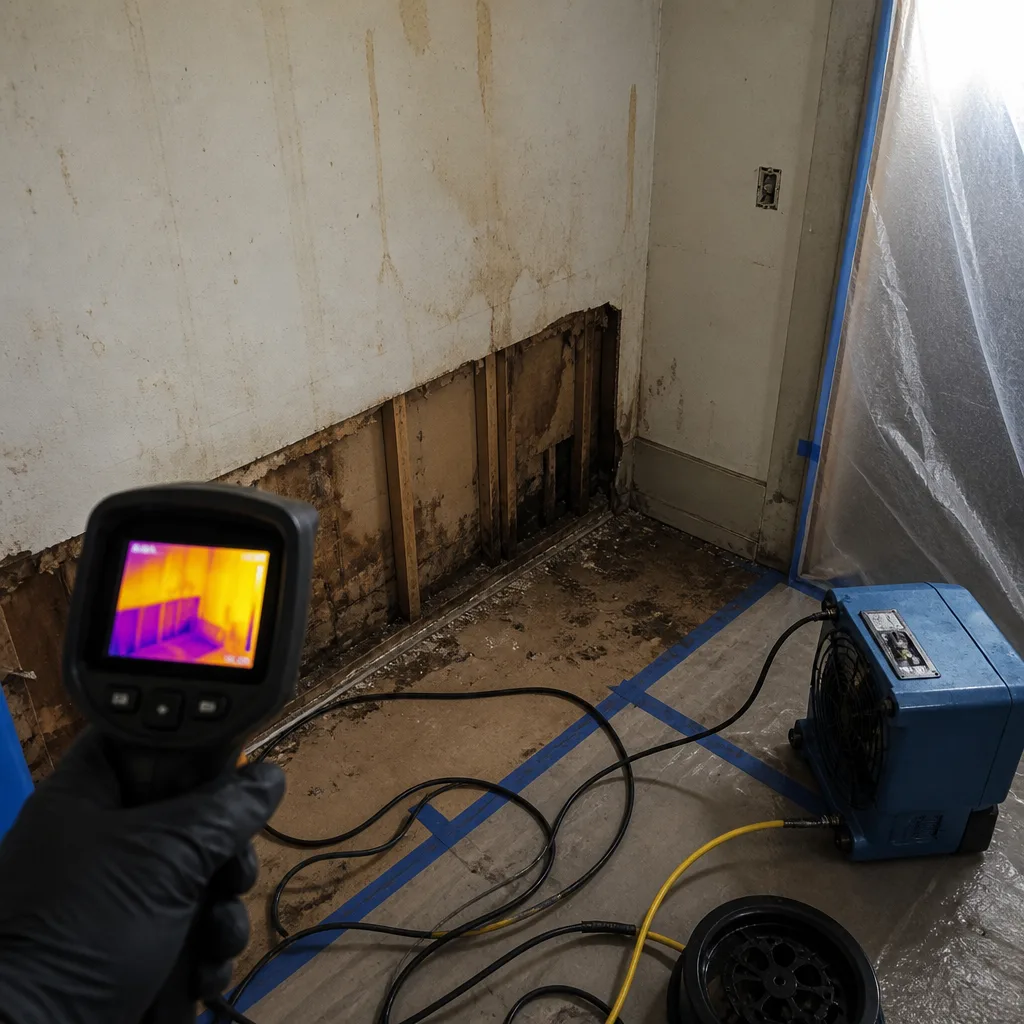 Before
 After
AfterDamage Restoration Warning Signs: A Escondido Homeowner’s Reference Guide
By the time Escondido homeowners see a stain on the ceiling, the moisture event that caused it is often weeks old. Insurers use that time gap to argue the damage was gradual, not sudden, which is the difference between a covered claim and a denied one. This guide and our more guides & resources cover the measurable precursors that matter: moisture reading thresholds in common building materials, how to read efflorescence lines, why musty odors that track with marine layer mornings indicate active mold, and the specific visual patterns we see in Escondido’s stucco-and-tile construction. You’ll learn what to document, when to call for a professional inspection, and how a dated record protects your coverage.
Quick Answer
The warning signs that predict costly damage in Escondido homes are measurable, not just visible. Wood moisture content above 16%, efflorescence lines at foundation height that reappear after cleaning, musty odors present only during high-humidity mornings, and stucco blistering with measurable depth (3mm or more) all indicate active water intrusion that requires documented inspection. These precursors typically appear 2-6 weeks before visible staining or structural damage.
Table of Contents
- Moisture Reading Thresholds That Define a Problem
- Efflorescence vs. Active Hydrostatic Seepage
- Odor Mapping: Why Smells That Come and Go Matter
- Visual Indicators Specific to Escondido Homes
- Why Documented Inspection Timing Protects Your Claim
- Room-by-Room Warning Sign Checklist
- Common Mistakes to Avoid
- When to Call a Professional
- Frequently Asked Questions
BeforeAfterMoisture Reading Thresholds That Define a Problem
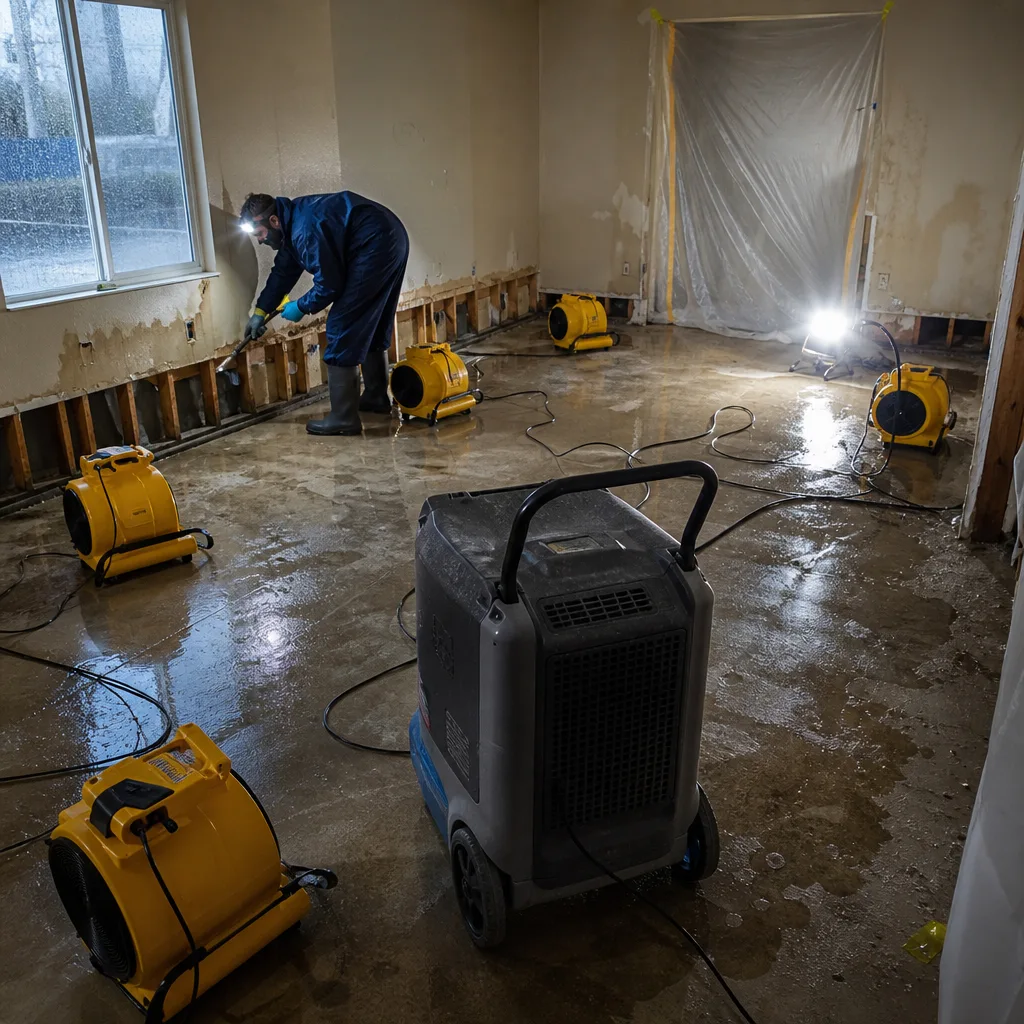
Most homeowners believe water damage announces itself with buckled floors or visible mold. In our experience across more than 12,000 restorations since 2011, the critical window for intervention closes long before those symptoms appear. The measurable indicator is moisture content in building materials, and the thresholds are specific enough to cite in a claim file.
Wood framing and structural lumber: Baseline moisture content in Escondido’s inland Southern California climate ranges from 8% to 12% depending on season and proximity to Lake Wohlford or the San Pasqual Valley. A reading of 16% or higher indicates active water intrusion requiring investigation. At 20%, wood-destroying fungi can colonize; at 28%, structural integrity degrades measurably. We log these readings with calibrated pin-type meters, photograph the probe placement, and include the serial number in our drying records.
Drywall and gypsum board: Drywall in conditioned Escondido homes typically reads below 0.5% moisture content by weight using gravimetric testing, or 5-7% on a non-invasive meter. Readings above 1% by weight (approximately 12-15% on standard non-invasive meters) indicate saturation in the paper facing or core. The critical distinction: drywall can read “elevated” near bathrooms or kitchens from normal humidity without active intrusion. We confirm with pin-meter verification at multiple depths and map the gradient. A flat reading across the wall suggests ambient humidity; a spike localized to a stud bay or baseplate indicates a leak.
Concrete slab and foundation: Concrete moisture is measured by relative humidity (RH) in the slab interior per ASTM F2170, or by calcium chloride emission rates. In Escondido’s clay-heavy soils, particularly in the older neighborhoods south of Grand Avenue where expansive soil movement is documented, slab RH above 75% indicates vapor transmission that can destroy flooring adhesives and foster mold in the boundary layer. We see this frequently in homes built between 1960 and 1990 on the west side of Escondido, where vapor barriers were inconsistently installed.
Psychrometric data: This is the measurement of air temperature, relative humidity, and vapor pressure differential (the force that drives moisture from wet materials into drier air). A vapor pressure differential below 10 grains per pound indicates inadequate drying conditions, even if the air feels dry to occupants. Our crews document this with digital hygrometers at each visit, producing the daily logs that insurers expect to see when reviewing a water damage restoration in Escondido.
Key equipment: We deploy professional-grade moisture detection from Dri-Eaz and Phoenix, with thermal imaging to locate anomalies before surface damage appears. Every reading is logged to IICRC S500 standards, the water damage restoration protocol that defines documentation requirements for insurance review.
Efflorescence vs. Active Hydrostatic Seepage
Escondido homeowners with concrete foundations, block walls, or slab-on-grade construction regularly discover white, powdery deposits at the base of walls or on garage floors. The common assumption is that this indicates structural failure or active water intrusion. The distinction determines whether your insurer pays for remediation or denies the claim as “maintenance” or “pre-existing.”
Efflorescence is a mineral deposit, not damage. It forms when water-soluble salts in concrete or mortar migrate to the surface with moisture, then crystallize as the water evaporates. The deposit is dry, chalky, and brushes away with light abrasion. It indicates that moisture passed through the material at some point, but not that liquid water is currently moving. In Escondido’s climate, efflorescence commonly appears after winter rains or irrigation overspray against foundation walls, then remains as a historical marker.
Active hydrostatic seepage is liquid water under pressure. It presents as dampness that returns within 24-48 hours of cleaning, often with a darkening of the concrete or mortar joint, and may carry sediment or staining beyond white salt deposits. In homes near Escondido Creek or in the flood-prone areas of the Kit Carson Park vicinity, hydrostatic pressure from seasonal groundwater rise can force water through slab joints or foundation cracks. This is active damage, and the source must be addressed before restoration begins.
The documentation test: Clean the area with a dry brush and photograph it with a dated reference. Return in 48 hours. If the deposit returns and the surface feels damp to touch or reads elevated on a moisture meter, you have active seepage. If the surface is dry and the deposit is merely residual, you have historical efflorescence. We perform this documentation at no charge for homeowners who need a dated record for their insurer.
Why the distinction matters for claims: Insurers cover sudden and accidental water damage. They deny gradual seepage or maintenance-related moisture. A documented finding of active hydrostatic pressure, with moisture readings and photos, establishes that the condition was not pre-existing and was not discoverable through normal maintenance. Without that record, the adjuster will classify the damage as long-term and exclude it.
Our DryMark Restoration Escondido home team includes former claims professionals who understand how this determination is made. Every inspection includes written findings with moisture data, photo documentation, and a clear statement of whether the condition is active or historical.
Odor Mapping: Why Smells That Come and Go Matter
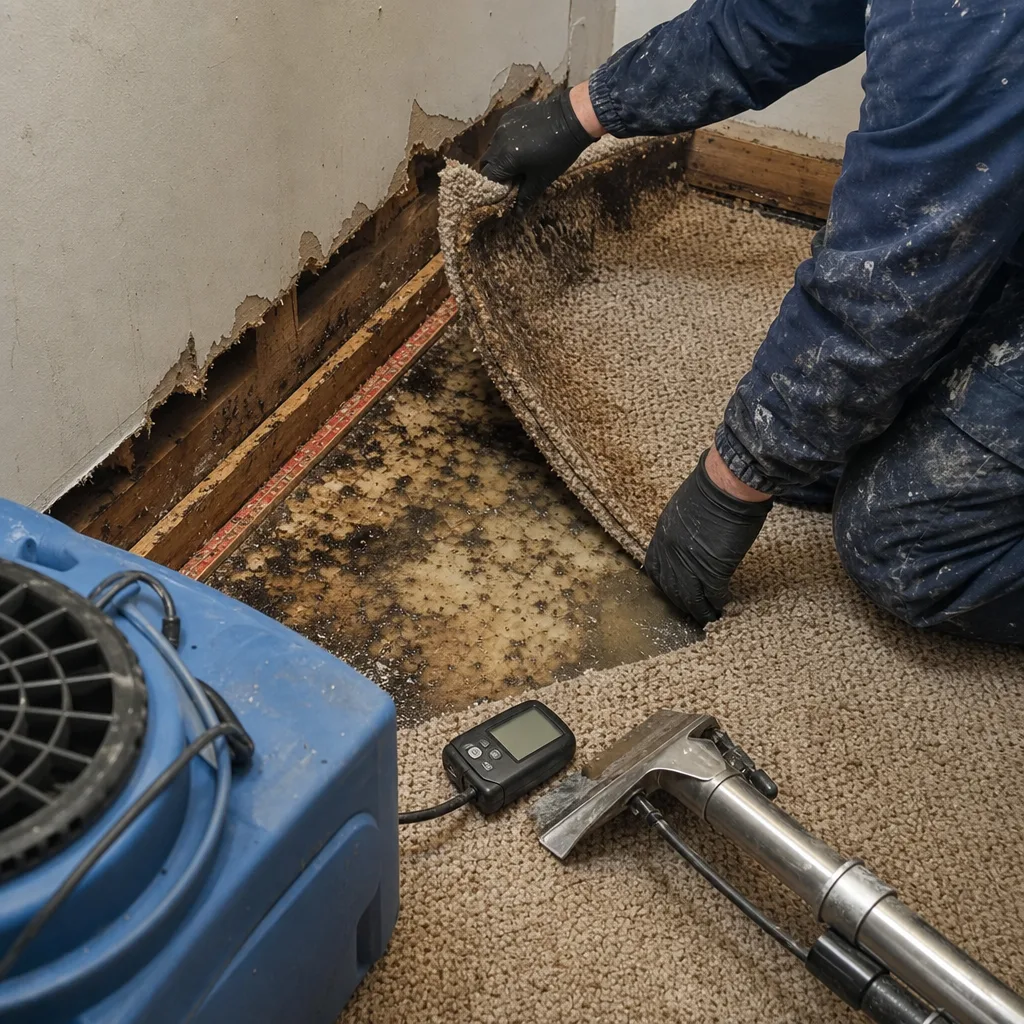
Musty odor is the most reported warning sign we encounter in Escondido homes, and the most misunderstood. Homeowners who smell mildew only during certain conditions often dismiss it as “just the house settling” or “old carpet.” The pattern of the odor reveals whether mold is actively growing, and active growth requires immediate remediation.
The science of mold odor: Active mold releases microbial volatile organic compounds (MVOCs) as a metabolic byproduct. These compounds are most concentrated when humidity rises above 60% relative humidity, which triggers fungal sporulation and metabolic activity. When humidity drops, the mold does not die; it enters dormancy and stops producing MVOCs at detectable levels. The odor disappears, but the colony remains viable.
Escondido’s marine layer pattern: From late spring through early fall, marine air pushes inland through the I-15 corridor, raising overnight humidity in Escondido by 20-40% compared to afternoon levels. Homes without adequate vapor barriers or with crawl space ventilation deficiencies experience humidity spikes in wall cavities and subfloor spaces. If you smell musty odor only between 5 AM and 10 AM, particularly in bathrooms, bedrooms with exterior walls, or near the garage, you are likely detecting active mold responding to daily humidity cycling.
Historical water damage smells different. Water-damaged materials that have dried but not been remediated may harbor dormant mold or bacterial contamination producing a constant, low-level odor that does not vary with humidity. This is still a problem, but it indicates a past event rather than ongoing intrusion. The distinction matters for both health and insurance purposes.
How to document odor mapping:
- Note the time of day, room, and weather conditions when odor is detected.
- Record relative humidity with a basic digital hygrometer (available for $15-25 at hardware stores).
- Check the same location at a different time of day to confirm the pattern.
- Photograph any visible staining or material distortion in the odor location.
- Request a professional inspection with air sampling and moisture mapping if the odor correlates with humidity above 60%.
Our mold remediation in Escondido includes air quality assessment with spore trap analysis and ERMI/HERSTMI-2 dust sampling where health concerns exist. All findings are documented with chain-of-custody records for insurance submission.
Visual Indicators Specific to Escondido Homes
Escondido’s housing stock spans from 1920s Craftsman bungalows in the Old Escondido Historic District to 1990s-2000s stucco tract homes in the northeast hills to recent infill near the city center. Each era has characteristic failure patterns that experienced restorers recognize immediately.
Stucco exterior blistering: Traditional three-coat stucco over wire lath, common in homes built before 1980 in Escondido, will blister when moisture accumulates at the paper barrier or when the lath corrodes. Measure the blister: if the raised area exceeds 3mm and feels soft or hollow when tapped, the substrate is wet. We see this frequently on north-facing walls and near planter beds where irrigation water pools against the foundation. In newer synthetic stucco (EIFS) systems, blistering indicates a breach in the drainage plane, often at window or door penetrations where sealant has failed.
Tile grout recession in bathrooms: Escondido’s hard water, sourced from a mix of local groundwater and imported supplies, accelerates grout erosion. When grout falls below the tile edge by more than 1/16 inch, shower water penetrates the mortar bed. In slab-on-grade homes, this moisture migrates to the perimeter walls; in second-story bathrooms, it damages the ceiling below. The warning sign is grout that is not merely discolored but physically recessed, with tiles that sound hollow when tapped (indicating debonded mortar).
Nail pops in drywall near exterior walls: In Escondido’s inland climate, temperature swings of 30-40°F between day and night cause differential expansion between wood framing and drywall. When moisture is present in the wall cavity, the expansion cycle accelerates and pushes fasteners through the finish. Nail pops clustered within 24 inches of an exterior wall, particularly on the west or south exposure, suggest thermal bridging combined with elevated moisture content. Random nail pops throughout a ceiling are more likely truss uplift or normal settling.
Ceiling texture patterns: “Popcorn” texture applied before 1980 may contain asbestos and will sag when the drywall paper facing absorbs moisture. The sagging pattern matters: a linear sag following a drywall seam indicates a roof leak at the framing member above; a circular or irregular sag suggests a plumbing leak or condensation point. We document the pattern with photos and moisture readings before any disturbance, since asbestos-containing texture requires abatement protocol if disturbed.
Garage floor patterns: In Escondido’s hillside homes, particularly in the Felicita and Hidden Meadows areas, garage slabs often show a characteristic half-moon staining at the uphill wall. This indicates subsurface water movement through the stem wall or inadequate drainage at the exterior grade. The stain may be dry to touch but reads elevated on a concrete moisture test, indicating ongoing vapor transmission that will destroy stored items and foster mold in the wall cavity.
Why Documented Inspection Timing Protects Your Claim
The single most expensive sentence in a homeowner’s insurance policy is the exclusion for “damage caused over a period of more than 14 days” or language to that effect. Insurers apply this exclusion routinely when visible damage suggests long-term moisture exposure. The homeowner’s defense is a documented record establishing when the problem was first detectable by a reasonable inspection, as detailed in our How to Hire a Damage Restoration Contractor in Escondido: A Step-by-Step Guide.
The “sudden and accidental” standard: Most homeowner policies cover water damage that is sudden and accidental, not gradual or caused by maintenance neglect. A burst pipe is sudden. A slow leak behind a shower valve that produces visible mold in six months is gradual. The gray area, where most disputes arise, is the leak that runs for three weeks before visible damage appears. Was it discoverable? Should the homeowner have known?
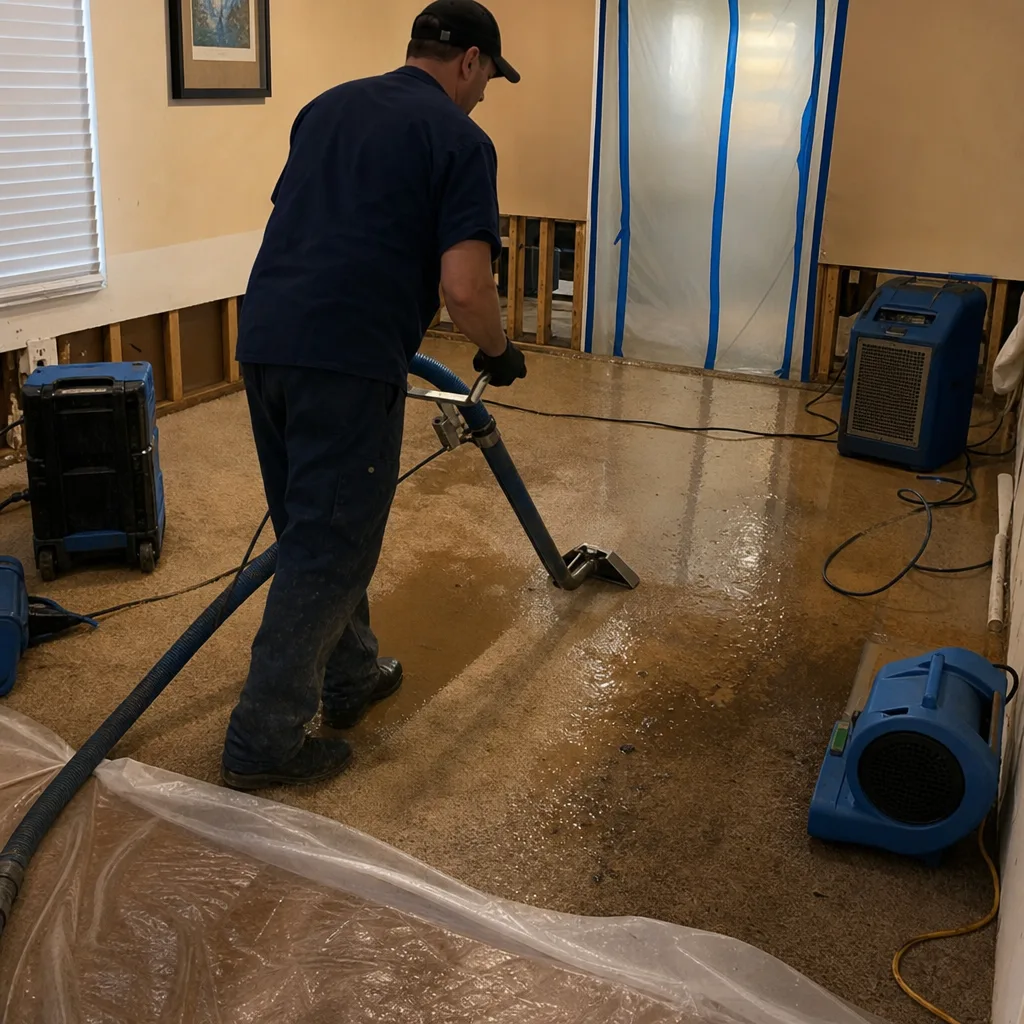
How documentation changes the analysis: When DryMark Restoration Escondido performs an inspection, we produce a written report with dated photos, moisture readings, thermal images, and a narrative of findings. If we find elevated moisture in a wall cavity with no visible surface damage, we have documented that the problem was detectable by professional means but not by normal homeowner observation. This record, created before the visible damage appears, establishes the timeline for the insurer.
The inspection as insurance: We recommend professional moisture inspection in these scenarios:
- After any plumbing repair, even “minor” leaks, to confirm complete drying
- Before home sale or purchase, particularly for homes built 1960-1995 in Escondido
- Following roof maintenance or HVAC service that required attic or crawl space access
- When odor mapping (as described above) reveals humidity-correlated patterns
- After any water intrusion event, including overflows, appliance failures, or irrigation overspray
Our inspection includes a written scope with moisture readings, photo documentation, and a clear statement of recommended action. Per Haven Standard, Clause 1, the written price for any recommended work is delivered before any work begins. The inspection itself is documented and dated, creating the record that protects your coverage if damage develops later.
The fire and smoke damage restoration in Escondido we perform follows the same documentation protocol, since smoke and water damage frequently co-occur in fire suppression events. Every visit produces a photo record, a written scope, and a moisture log where water was used.
Room-by-Room Warning Sign Checklist
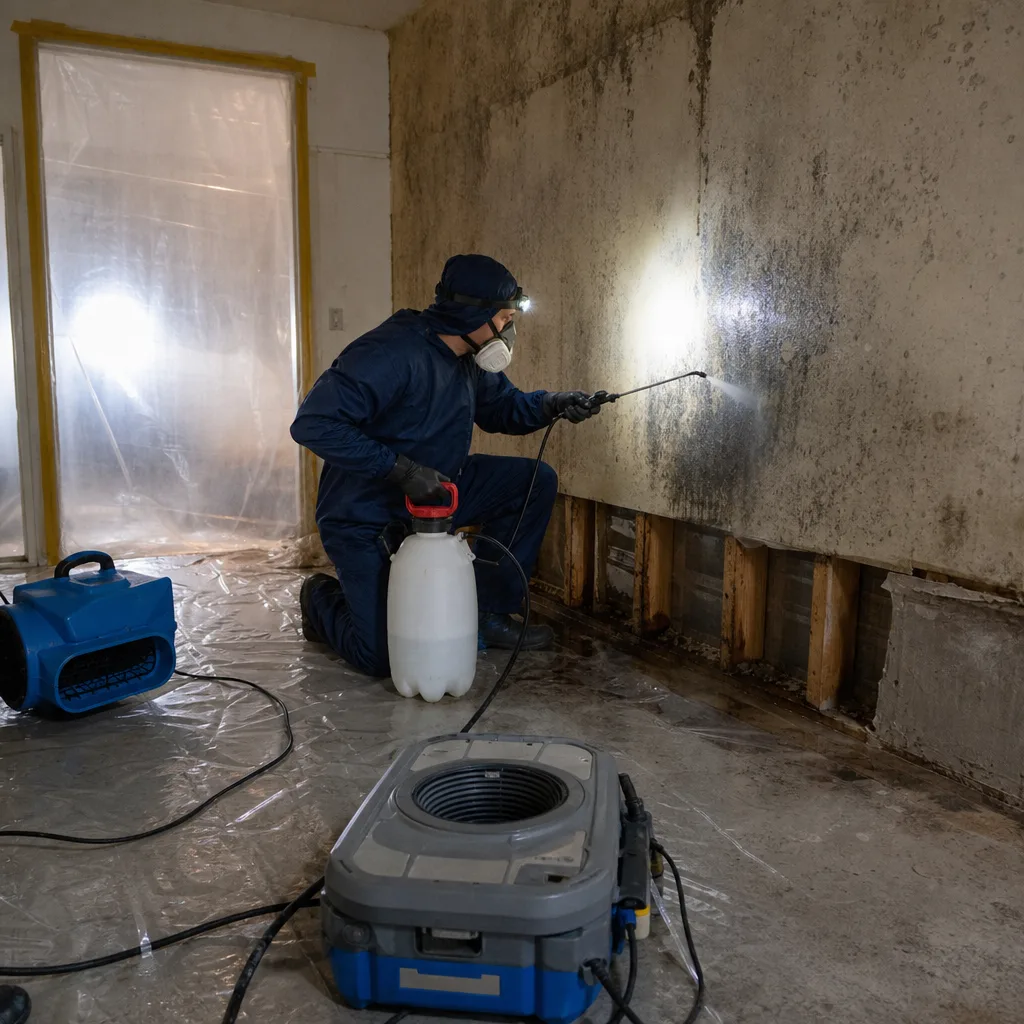
Use this checklist for systematic inspection. Document findings with photos and notes.
Kitchen
- Check cabinet base under sink with moisture meter; readings above 16% in particleboard or plywood indicate active leak
- Inspect dishwasher supply line and drain hose for corrosion, kinking, or water staining at connections
- Verify refrigerator icemaker supply line is braided stainless, not plastic (failure mode in Escondido’s hard water)
- Test floor near dishwasher and refrigerator with non-invasive meter; gradient readings suggest subfloor moisture
- Examine grout and caulk at counter-to-backsplash joint; gaps allow sink splash to penetrate wall
Bathroom
- Measure grout recession; more than 1/16 inch below tile edge requires regrouting and moisture verification
- Tap tiles around shower pan and walls; hollow sound indicates debonded mortar and likely moisture
- Check toilet base for movement or staining; wax ring failure allows sewer gas and subfloor damage
- Inspect exhaust fan duct for termination at exterior; ducts terminating in attic space cause condensation damage
- Verify caulk at tub/shower junction is continuous and adherent; missing caulk allows daily water intrusion
Laundry Room
- Replace rubber washing machine hoses with braided stainless; failure rate increases dramatically after 5 years
- Check floor drain for backup or slow drainage; indicates main line restriction that can cause overflow
- Inspect dryer vent for lint accumulation and proper exterior termination; blocked vents cause heat buildup and moisture retention
Garage
- Examine slab at uphill wall for half-moon staining or efflorescence; test with concrete moisture probe
- Check water heater pan for standing water; temperature-pressure relief valve discharges indicate thermal expansion issues
- Verify garage door weatherseal is intact; wind-driven rain enters at bottom corners during Escondido’s winter storms
Exterior
- Inspect stucco for blistering exceeding 3mm; measure and photograph for comparison
- Verify grade slopes away from foundation; pooled water against stem wall causes hydrostatic pressure
- Check downspout discharge points; water should exit 6 feet from foundation or into drainage system
- Examine window and door sealant for cracking or separation; failed sealant is primary intrusion point in stucco construction
Attic and Crawl Space
- Look for daylight through roof penetrations; any visible light indicates breach for water entry
- Check insulation for compression or staining; wet insulation loses R-value and harbors mold
- Verify ventilation openings are clear; blocked vents cause humidity accumulation in Escondido’s marine layer conditions
Common Mistakes to Avoid
- Waiting for visible damage before acting. By the time stains appear, moisture has typically been present for weeks. Insurers use this delay to argue gradual damage. Document precursors with professional inspection instead.
- Confusing efflorescence with active seepage. Homeowners who scrub white deposits without testing for moisture miss the distinction that determines claim coverage. Always verify with a 48-hour observation and moisture reading.
- Using bleach on mold. Bleach does not penetrate porous materials and can add moisture that worsens the problem. It also removes visible evidence that restorers need to document extent. Leave mold undisturbed until documented.
- Ignoring marine-layer-correlated odors. Musty smells that appear only in morning humidity are active mold, not “old house smell.” The pattern is diagnostic and should be professionally assessed.
- Accepting verbal estimates for restoration work. Without a written scope and price, you have no documentation for your insurer and no protection against scope creep. Haven Standard, Clause 1 requires written price before work begins for this reason.
- Failing to document pre-existing conditions after purchase. Escondido homes built 1960-1990 frequently have latent moisture issues. A professional inspection at purchase creates a baseline that protects against future claim disputes.
- DIY moisture meter use without calibration verification. Consumer-grade meters drift and give false reassurance. Professional meters are calibrated to manufacturer standards and readings are documented with serial numbers for insurance submission.
When to Call a Professional
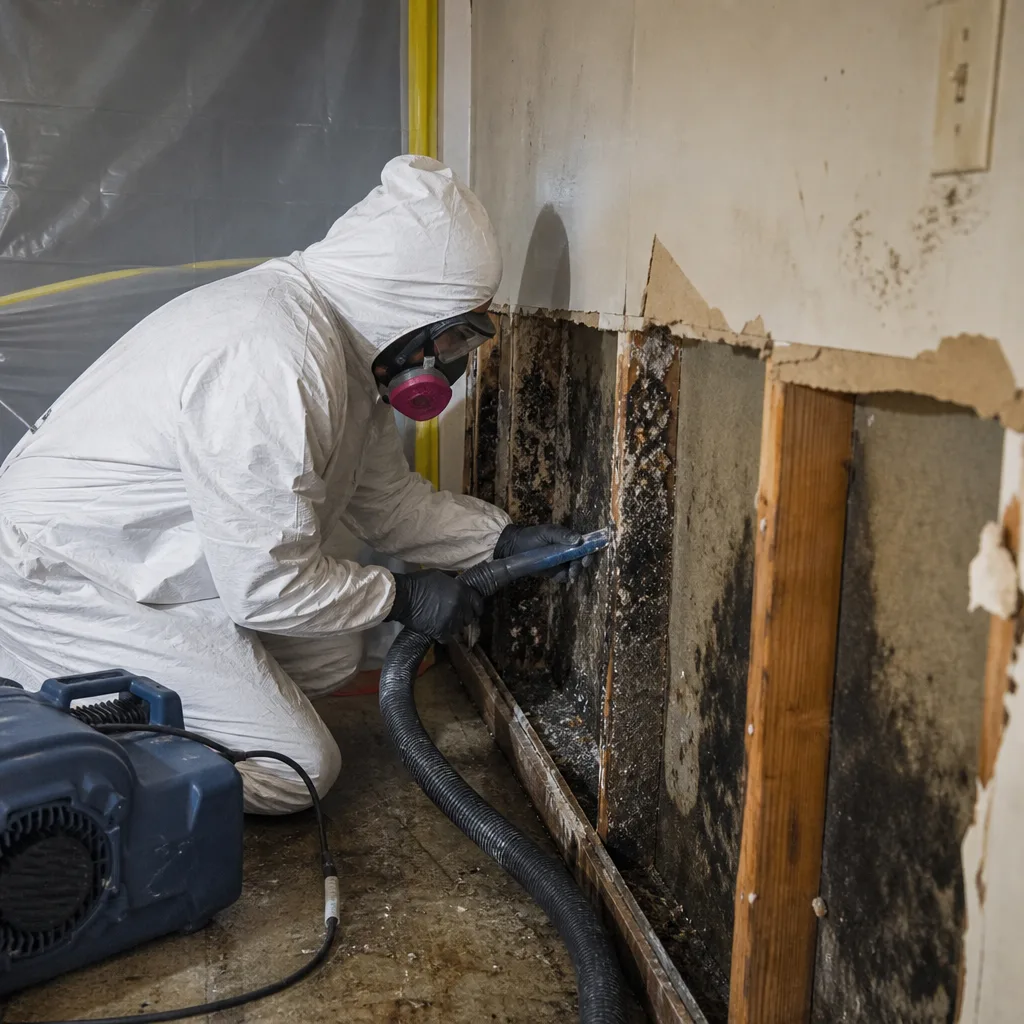
Call for documented inspection when you measure moisture above 16% in wood, when efflorescence returns within 48 hours of cleaning, when odors track with humidity above 60%, or when any visual indicator exceeds the thresholds in this guide. These are not emergencies requiring immediate mitigation, but they are conditions that will worsen and that insurers will question if left unaddressed.
For active water intrusion, sewage backup, or fire damage, call immediately for emergency response. Our live dispatch answers 24 hours a day, 7 days a week with no voicemail. A crew with background-checked, uniformed technicians will arrive with documented equipment, produce a written scope per Haven Standard, Clause 1, and begin photo documentation on arrival.
DryMark Restoration Escondido offers free estimates in Escondido. Call (760) 691-2950 to schedule inspection or request emergency response. We also provide free second opinions on any competitor’s written estimate.
Frequently Asked Questions
Moisture inspection with written findings, photo documentation, and moisture readings typically ranges from $150-$350 for residential properties under 3,000 square feet in Escondido. The inspection fee is credited toward any restoration work if damage is found. Call (760) 691-2950 for exact pricing for your property.
Coverage depends on whether the damage was “sudden and accidental” versus gradual. A documented professional inspection establishes when the problem was detectable and by what means, which is the standard insurers use. The key is creating a dated record before visible damage appears, not the timing of your personal observation.
Live dispatch answers every call 24 hours a day, 7 days a week with no voicemail. Emergency crews for water, fire, storm, and sewage damage are typically dispatched within the hour for Escondido addresses. Reconstruction and non-emergency inspection are scheduled at your convenience with a written scope delivered before work begins.
Visible mold exceeding 10 square feet, or any mold in HVAC systems, requires professional remediation per IICRC S520 standards. DIY vs Professional Damage Restoration: The Escondido Homeowner’s Decision Guide explains why DIY removal disturbs spores without containing them, spreads contamination, and removes evidence that insurers and remediators need to assess extent. More importantly, visible mold often indicates hidden colonization in wall cavities that only professional moisture mapping reveals.
Our documentation includes daily drying logs with psychrometric data, room-by-room moisture readings with equipment serial numbers, photo records from every visit with timestamps, and a written scope signed before work begins. This is the standard that former claims adjusters built into our process, because we have seen what documentation gaps cost homeowners when insurers deny payment.
Our Seasonal Damage Restoration Care for Escondido: Year-Round Homeowner’s Guide notes that Escondido’s inland location brings larger temperature swings and lower baseline humidity than coastal areas, which actually reduces some mold risk. However, the marine layer intrusion through the I-15 corridor, combined with clay soils that expand and crack foundations, creates specific moisture pathways that coastal homes don’t experience. Stucco construction, prevalent throughout Escondido, also conceals moisture longer than siding systems. The risk profile is different, not lower.
The Bottom Line
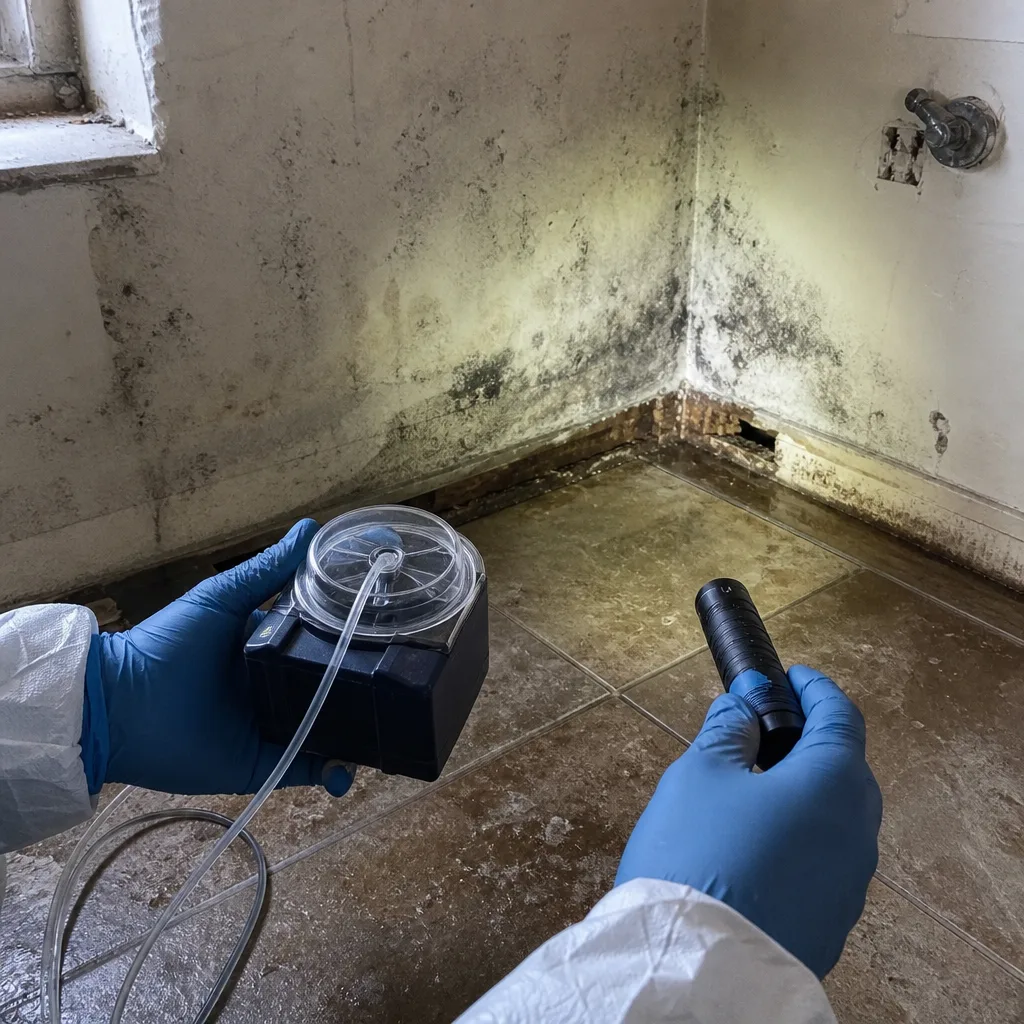
The warning signs that protect your home and your insurance coverage are measurable and specific: 16% moisture in wood, efflorescence that returns within 48 hours, musty odors correlated with 60% relative humidity, stucco blistering exceeding 3mm, and grout recession below tile edges. These precursors appear weeks before visible damage and create the documentation window that insurers recognize. Waiting for stains or mold growth costs both money and coverage. Systematic inspection, professional documentation, and a written scope before any work begins are the practices that turn restoration from a disputed expense into a payable claim.
Written by Alicia Brennan, Owner at DryMark Restoration Escondido, serving Escondido since 2011.